

March 2026 Nutrition Newsletter
March 01st, 2026
Si desean leer el boletín en español, hagan clic aquí.
In this issue:
• National School Breakfast Week is March 2-6
• March is National Nutrition Month
• New Item Survey: CA Sushi Bowl & Pizza Toppings
• Farm to School Spotlight: Harvest of the Month – Rainbow Carrots
• Menu Spotlight: Breakfast Entrees
• CA Removes Synthetic Food Dyes From School Food
• Job & career opportunities
National School Breakfast Week is March 2-6
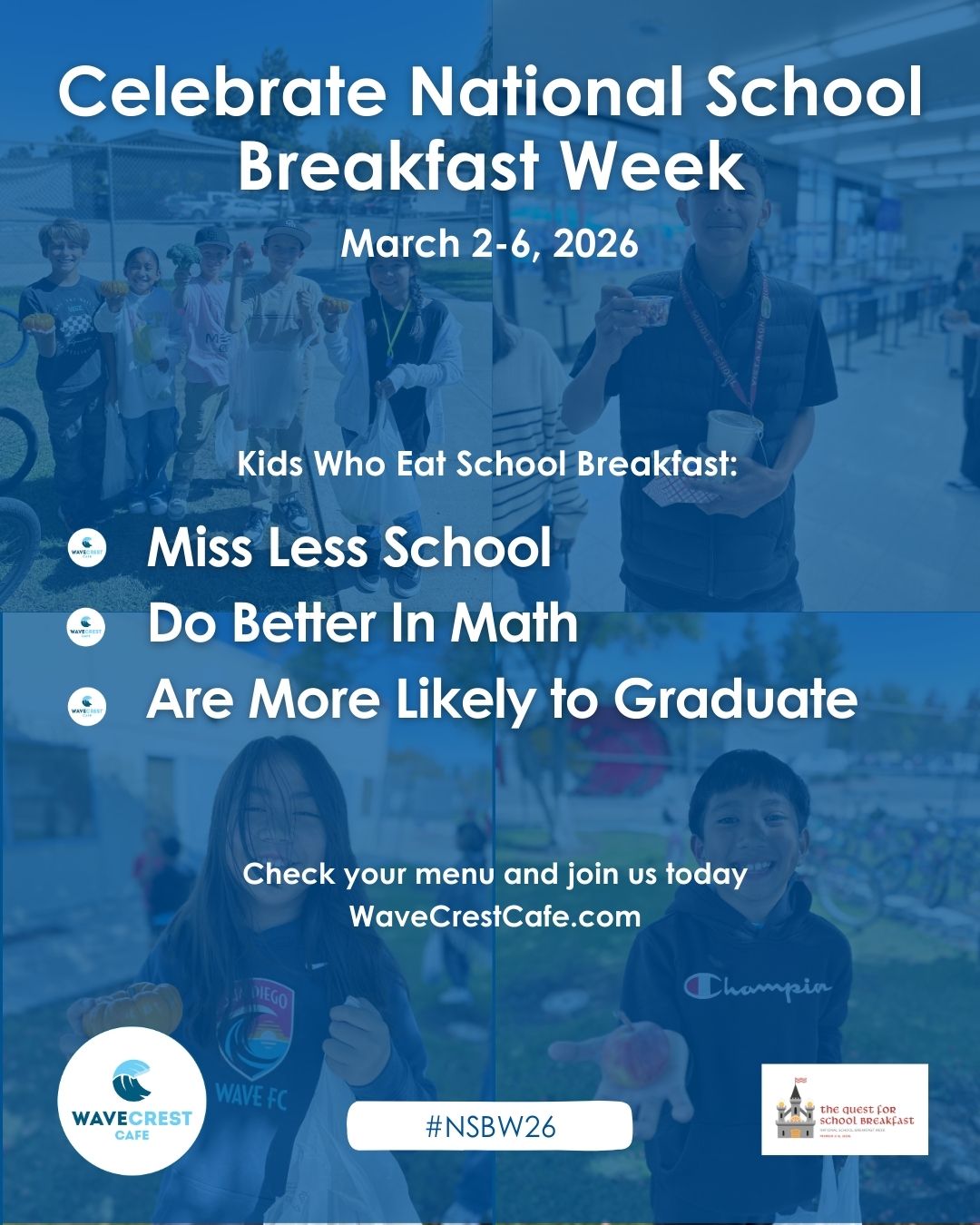
The first week of March is National School Breakfast Week. This is a week that was permanently established by the US Congress in 1975. We offer a wide variety of tasty and healthy breakfast items at school every day, and we want as many people as possible to take advantage of that.
Why is breakfast so important? Studies show that children who eat school breakfast are more likely to:
• Reach higher levels of achievement in reading and math
• Score higher on standardized tests
• Have better concentration and memory
• Be more alert and maintain a healthy weight
The National School Breakfast Program serves more than 15 million children every school day.
 To get the week started, try this quiz and see what you know and what you may not know about the most important meal of the day. https://bit.ly/3OfZjlJ
We hope all of our students will join us for breakfast daily. Click here to see what’s on your menu.
March is National Nutrition Month

National Nutrition Month® is an annual campaign created by the Academy of Nutrition and Dietetics. During the month of March, we invite everyone to focus on the importance of making informed food choices and developing sound eating and physical activity habits.
This year’s theme is “Discover the Power of Nutrition.” We’ll be offering tips and ideas throughout the month on how you can take steps toward developing and maintaining healthy habits, as well as eating delicious foods and having fun staying active.
Each week of National Nutrition Month® will focus on a different theme, and we’ll have content to go along with that. Please follow our social media channels for the latest information and ideas. The themes of the month will be:
Week 1: Power your day with nutrition
Week 2: Find advice backed by science
Week 3: Stay nourished on any budget
Week 4: Feel good with healthy habits
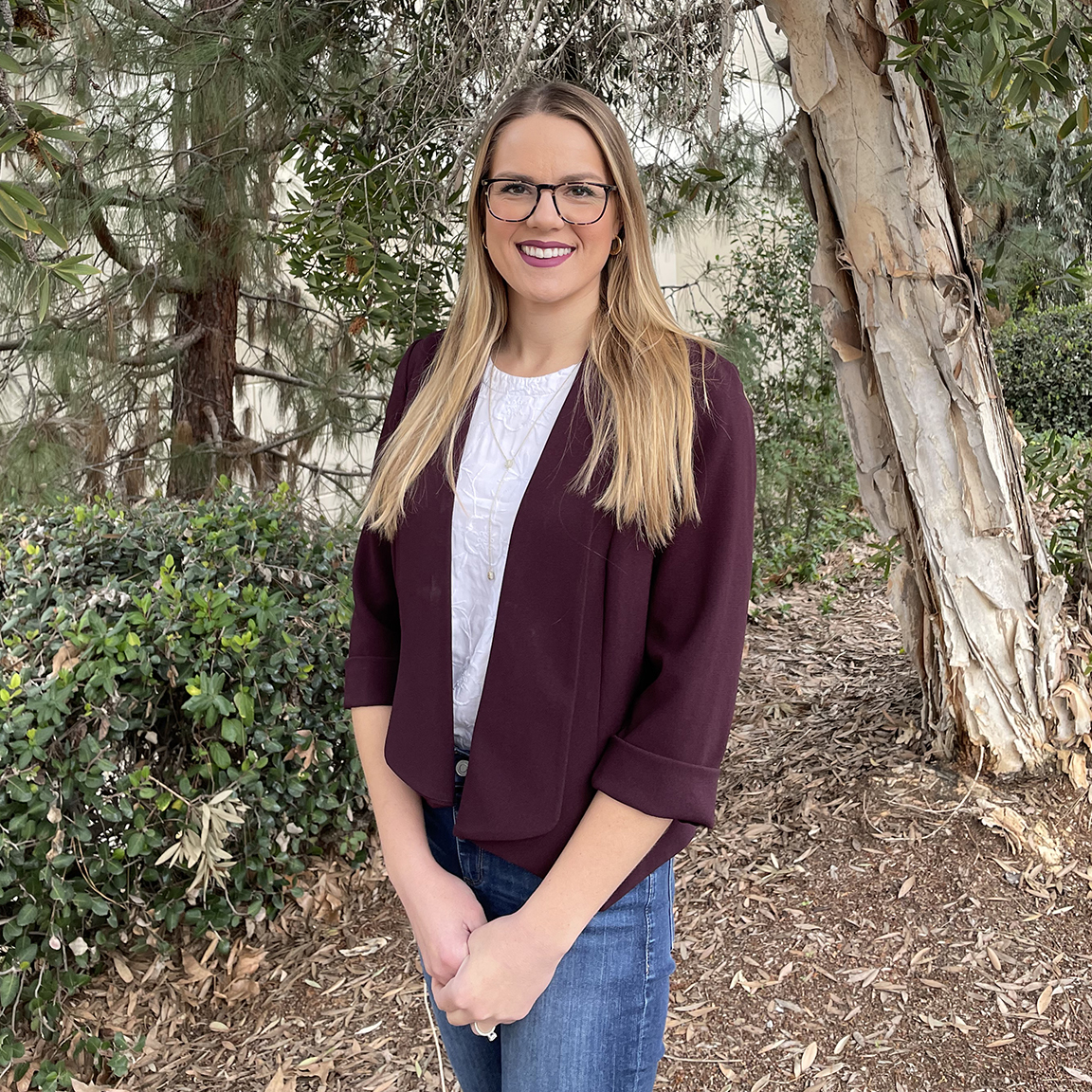
Karly Wasung, Director of Child Nutrition Services for WaveCrest Cafe, Vista Unified School District
March 11 is Registered Dietitian Nutritionist Day
This day, part of National Nutrition Month, honors and celebrates Registered Dietitian Nutritionists for the work they do in researching, guiding, and advocating for healthy nutrition and relationships with food.
We are fortunate to have two RDNs on our team: Our Director, Karly Wasung, and our Nutrition Education and Training Supervisor, Aleeza Hendershot. Thank you to Karly and Aleeza for your amazing work, insight, expertise, and guidance with everything we do!

Aleeza Hendershot is overseeing a taste test
RDNs must hold at least a master’s degree, complete accredited supervised practice, and pass a national exam.
Distinction from Nutritionists: All RDNs are nutritionists, but not all nutritionists are RDNs. RDNs are the only ones with the required, accredited training. In many states, including California, anyone can label themselves a nutritionist, which is why having the certification of a Registered Dietitian Nutritionist (RDN) or Certified Nutrition Specialist (CNS) is critical to ensuring you are getting credible guidance.
New Menu Item Survey: Sushi + Pizza Toppings

Hearing from our students is a vital part of what we do and how we craft menus. We have been testing new items for the Fall 2026 menu and need to hear from our students.
One item that has been received well in taste tests is a California Sushi Bowl. It is modeled on the popular California Roll, and features surimi (imitation crab), edamame, cucumber, carrots, and brown rice. We have also been offering a house-made spicy mayo and soy sauce packets on the side.
We also develop a different specialty pizza with each menu cycle, and would like to hear which of the recipes we’ve been working on would be your favorite.
Please take this 1-2 minute survey and make sure that your voice is heard as we develop our new menus. Thank you!
Farm to School Spotlight: February’s Harvest of the Month is Rainbow Carrots

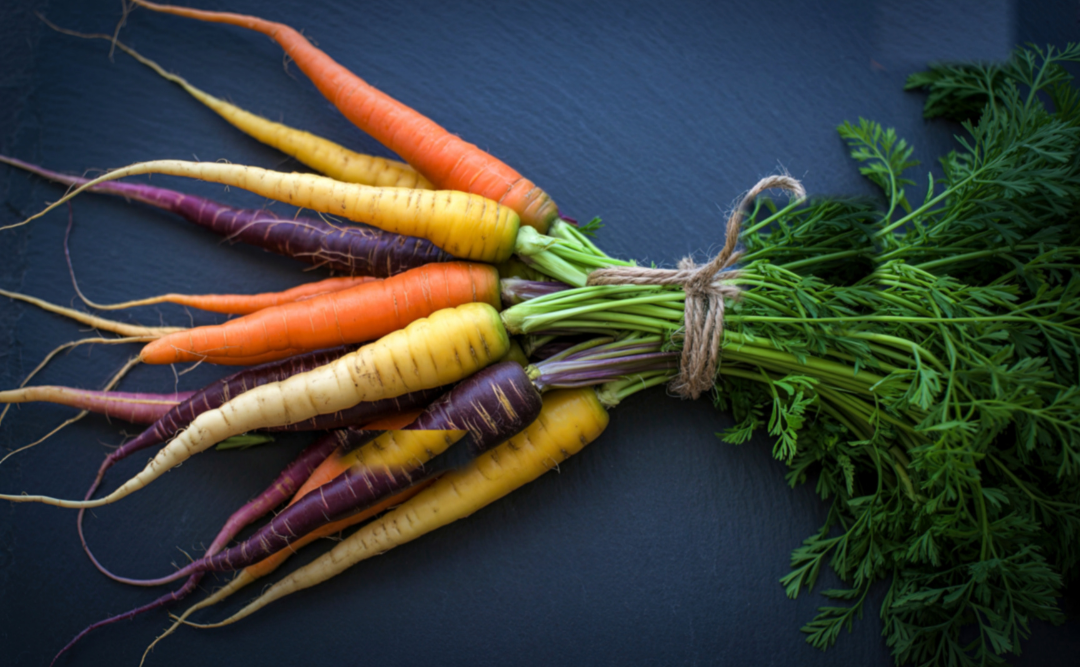
Our March featured food for Harvest of the Month is a colorful celebration of Rainbow Carrots. Classes participating in this program are in for a tasty treat and some fun learning.
 About Carrots
Carrots of all colors are an excellent source of vitamin A, with ½ of a cup providing more than 200% of the Recommended Daily Value. Carrots are also a good source of vitamin K, vitamin C, fiber, and potassium. In short, they’re really, really good for you.
What is Vitamin A?
Vitamin A is a fat-soluble vitamin, which means it can be stored for long periods of time in your body. It is also an antioxidant and helps support the immune system. Vitamin A is necessary for the proper development and functioning of our eyes, skin, and many other parts of our bodies. It is required for the normal functioning of the immune system.
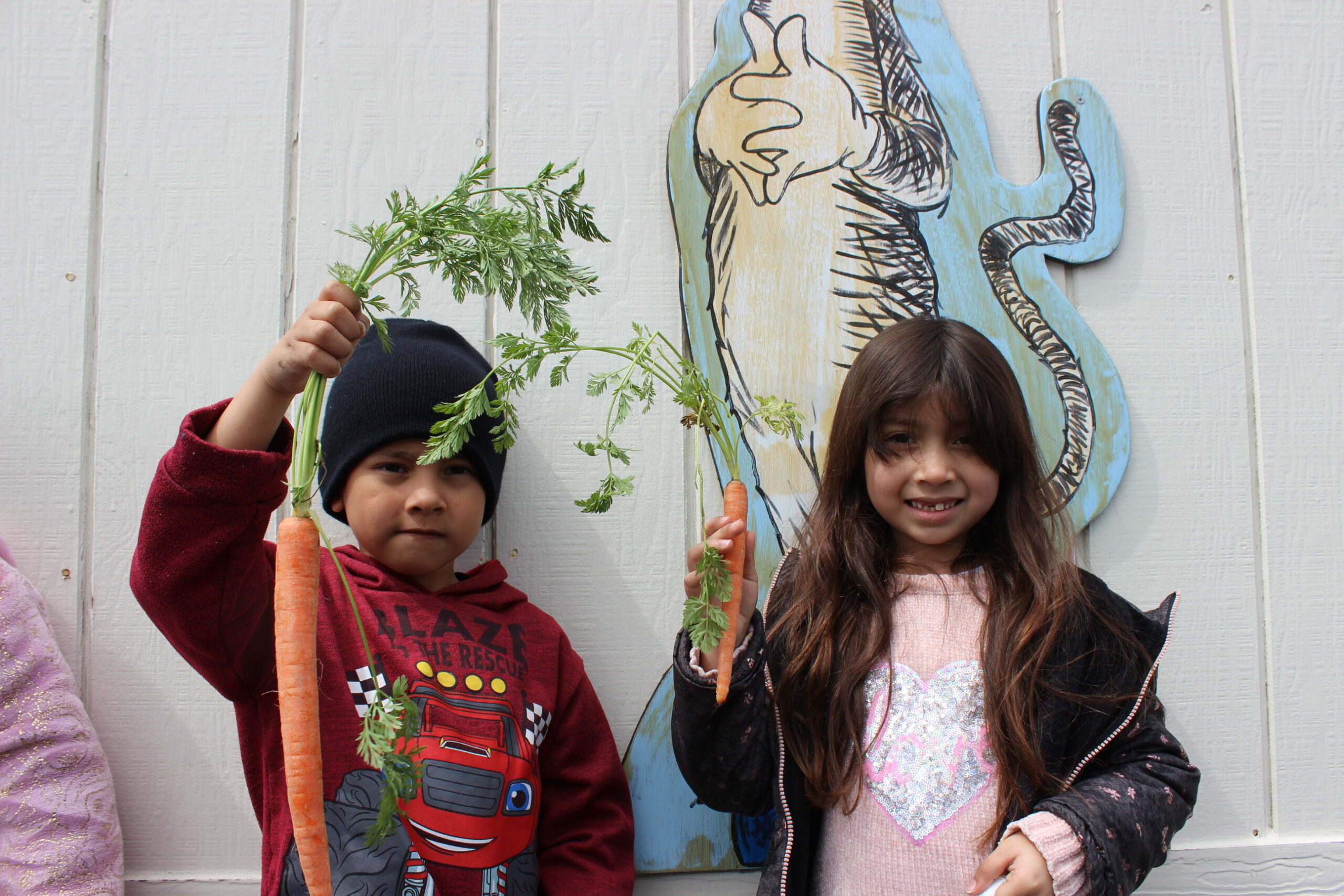 Vitamin A In Food
The type of Vitamin A that is found in colorful fruits and vegetables, like carrots, is called provitamin A carotenoid. It can be made into retinol in the body.
Champion Sources of Vitamin A:
Cantaloupe
Carrots
Cooked greens
Red bell peppers
Sweet potatoes
Winter squash
How Carrots Grow
Carrots are biennial, meaning they have a two-year life cycle. In the first year, the edible root is formed, followed by the production of the flower and seeds in the second year.
Carrots can be grown most anywhere. The ideal temperature range is 60 to 70 F. For this reason, carrots are grown year-round in California. They require a growing season of 110 to 160 days and need deep, loose, well-drained soils.
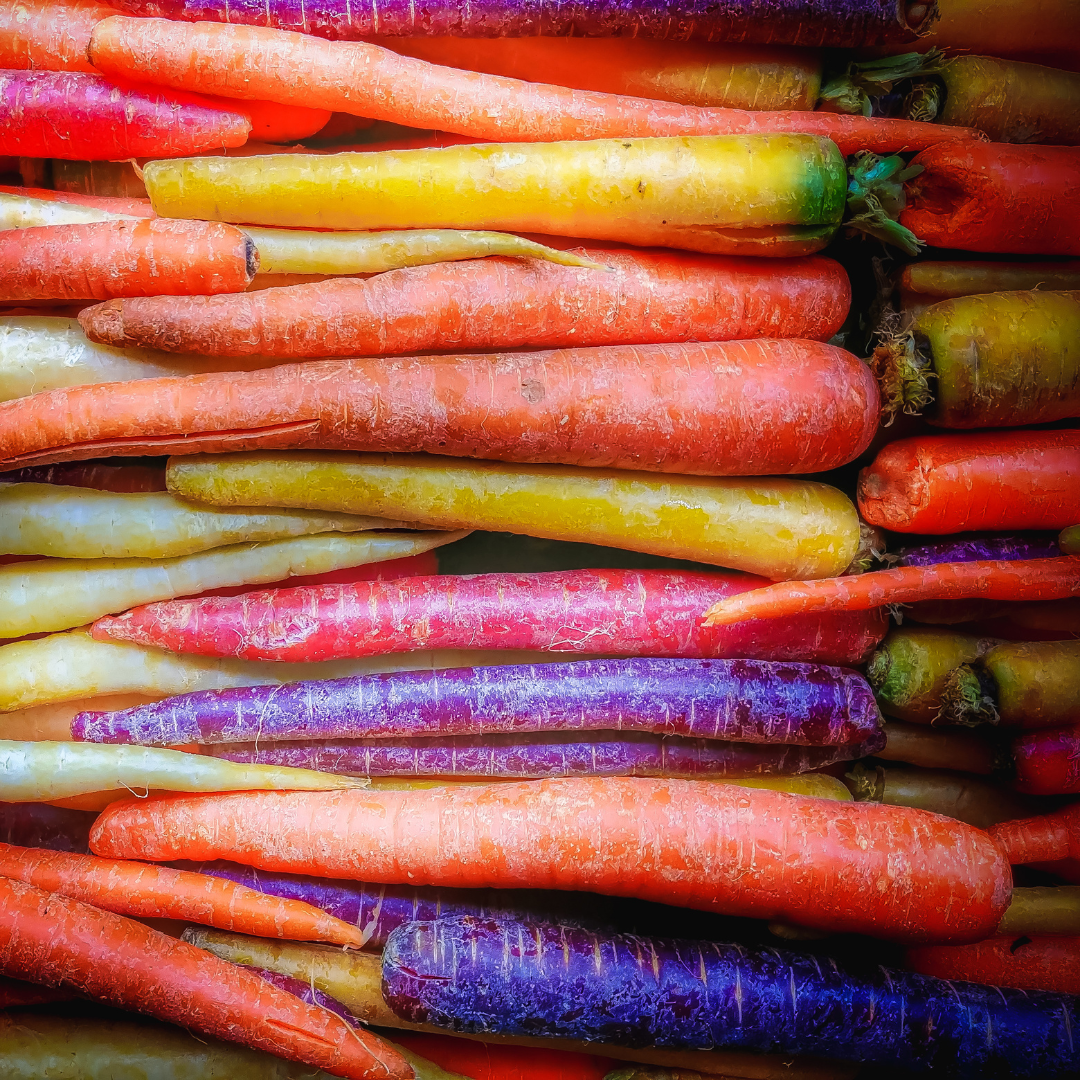 Colorful Carrots
Carrots are commonly grouped into two main varieties: eastern and western. Eastern carrots are the original cultivar and are usually purple or yellow in color, and have fewer branched roots.
Western carrots emerged in the Netherlands in the 15th or 16th century. Their orange color made them popular among countries associated with the House of Orange and the Dutch struggle for independence.
Carrots of every color have the same taste and the same vitamins and nutrients, which makes them a fantastic item to pair in salads and as a side dish.
Carrot Facts
• The average person eats 17 pounds of carrots per year.
• Carrots contain about 90% water.
• Most baby-cut carrots are made from large carrots that have been peeled and trimmed. The trimmings are used in salad mixes, juices, and other carrot products.
• Carrots, or “skirrets,” were originally purple, white, and yellow. The orange carrot was developed in Holland as a tribute to William I of Orange during the Dutch fight for independence from Spain in the 16th century.
Harvest of the Month Resources
Learn more about Rainbow Carrots with your class during a Harvest of the Month activity. Harvest of the Month is available for any classroom that wants to participate. If your child’s teacher wants to sign up for the program, it’s easy. For more information about the program, classroom tasting parties, and more, email Aleeza Hendershot.
==========
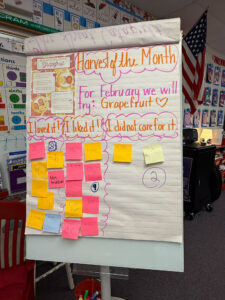
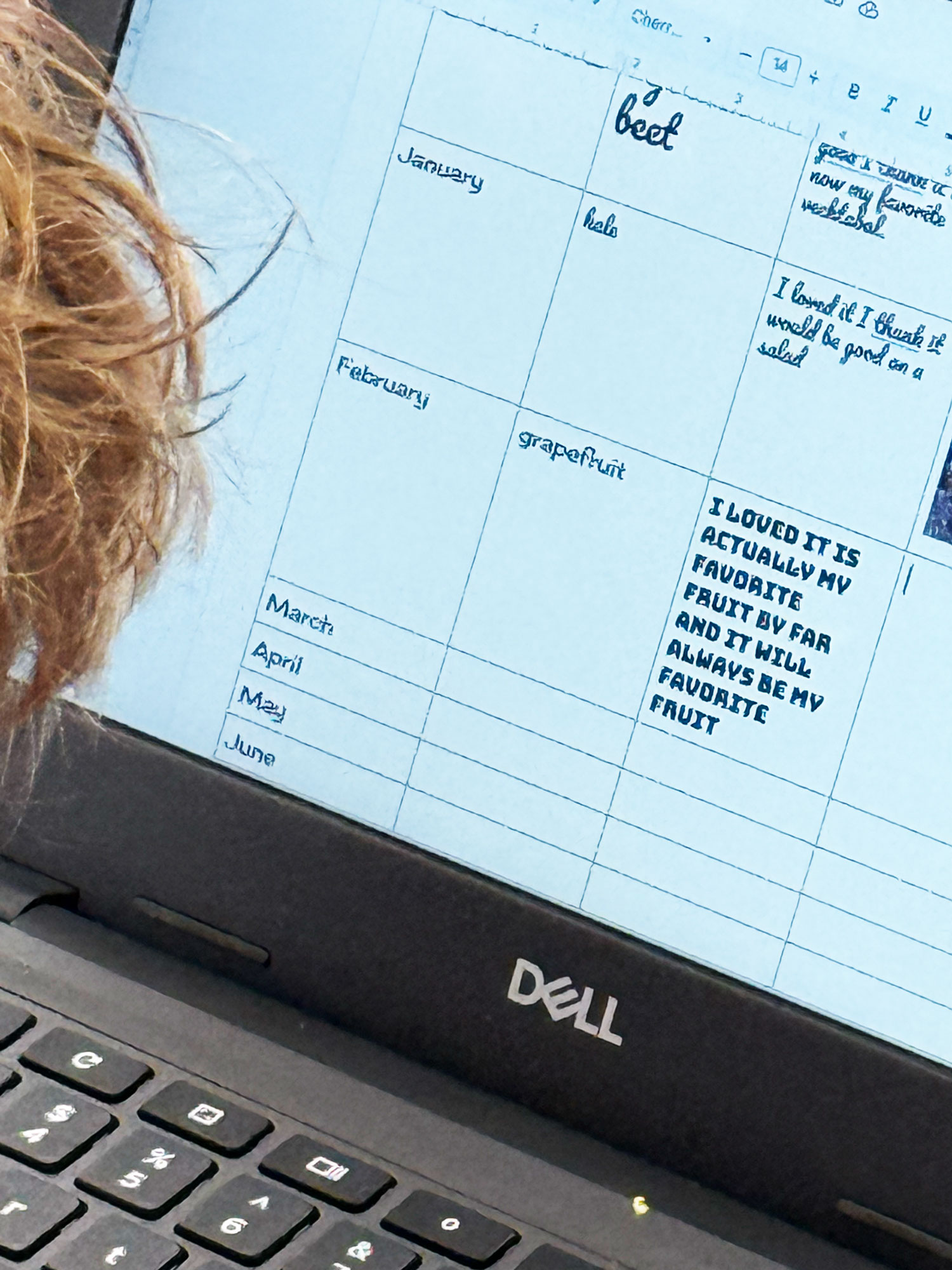
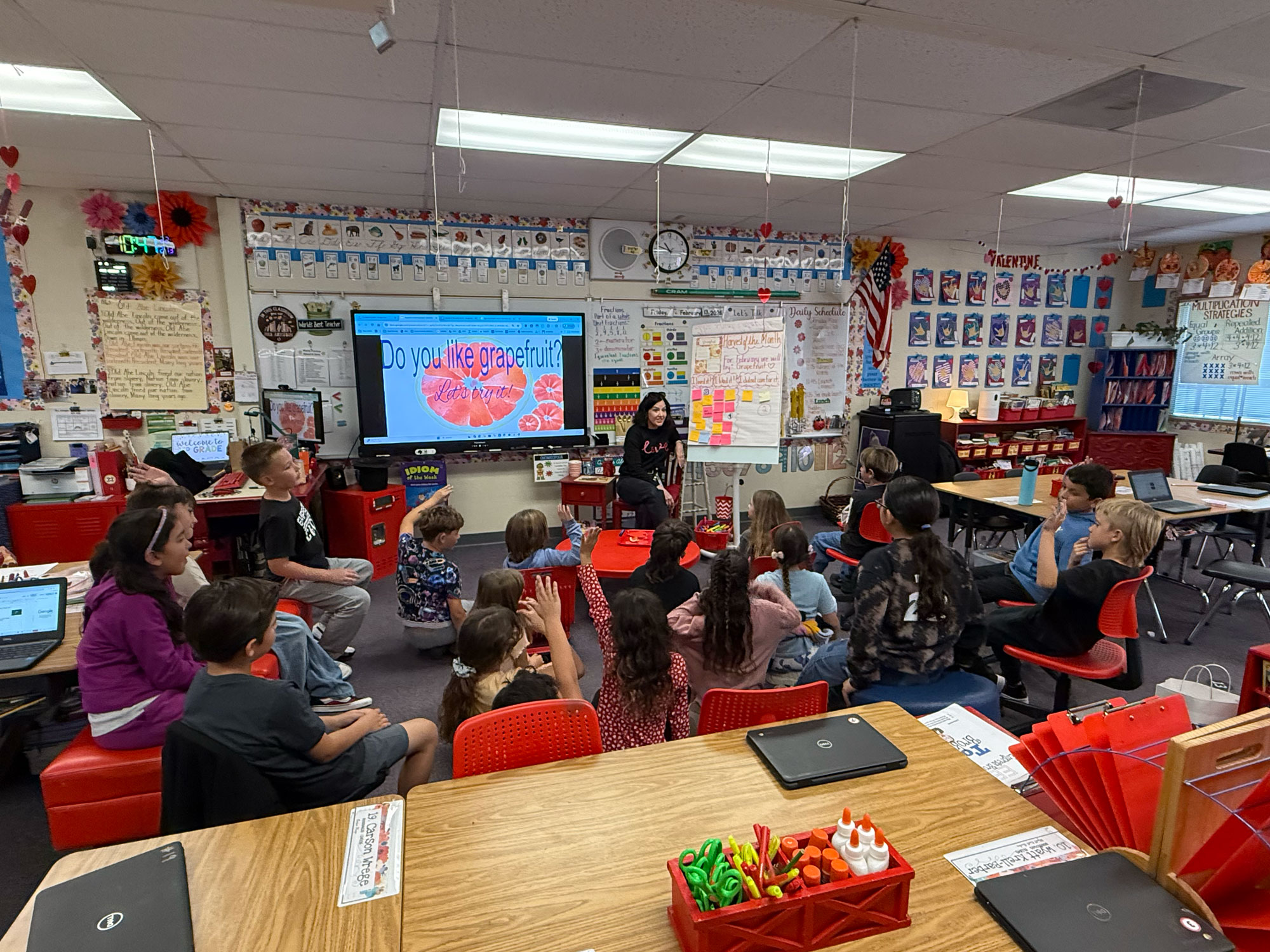
February’s Harvest of the Month was Grapefruit. Here are a few photos from classrooms where students were able to sample and learn about Grapefruit.

Menu Spotlight: Breakfast Entrees
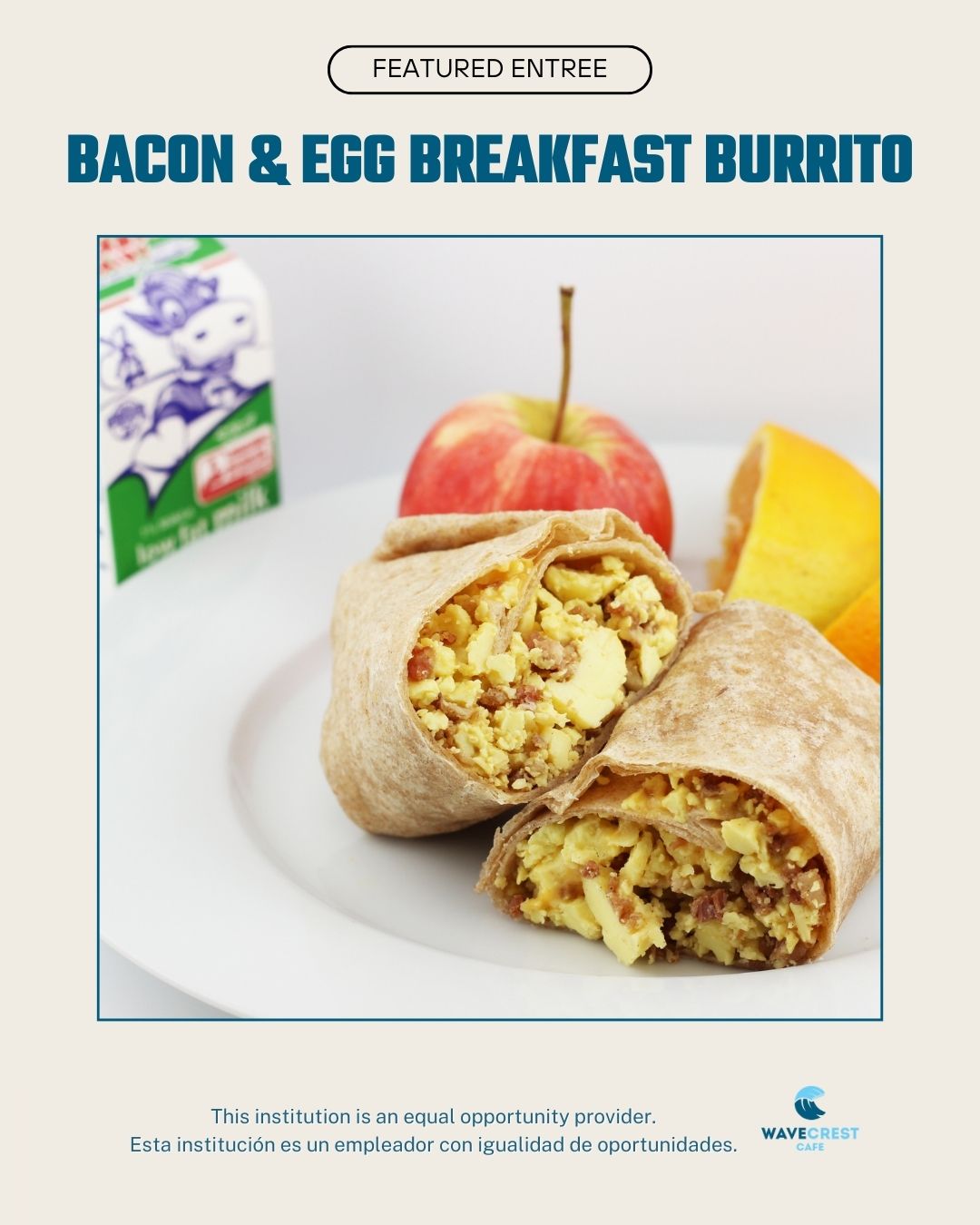
To celebrate National School Breakfast Week (March 2-6), we are spotlighting some of our new breakfast entrees, with a focus on the protein-rich options. We work to provide a variety of options for every meal so that students can try different items and make their own choices from our healthy options.
As with our lunches, our menu items are designed for the needs of children across grade levels, with lower levels of sodium and fat, plenty of protein, and whole-grains that deliver up to 3x the nutrients of enriched grains.
Our meals are designed to power learning all day long. Some of our featured breakfast entrees include:
• Bacon, Egg, and Cheese Burrito
• Turkey Sausage and Cheese Croissant
• Omelet with Hash Brown
• Ham and Cheese Croissant
• Bacon and Cheese Egg Bites
• French Toast with Sausage Links
• Sausage and Cheese Burrito
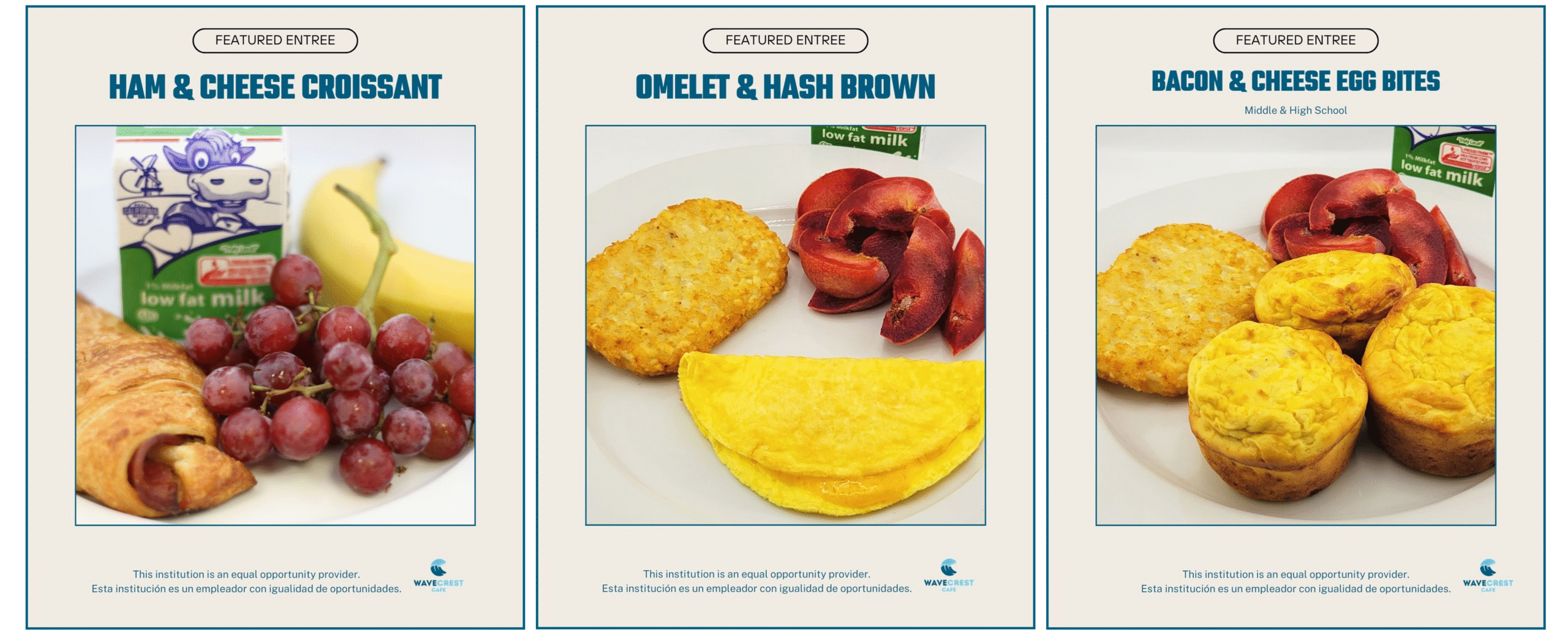
All breakfasts come with a selection of fresh, seasonal fruits. Enjoy these protein-packed entrees and join us for breakfast daily!
Be sure to check your school’s menu for the full selection of items and your daily favorites.
*** Menus are subject to change based on ingredient availability and staffing needs.
California Bans Synthetic Food Dyes in School Foods
The California School Food Safety Act (AB 2316), passed in the fall of 2024, states that as of December 31, 2027, six synthetic food dyes (Blue 1, 2; Green 3; Red 40; Yellow 5, 6) will be banned in K-12 public school meals and snacks.
The original deadline was set for June 30, 2026, and was later changed so that food producers would have more time to adjust their foods. The majority of our vendors worked with the June 2026 date, and so we will be implementing this along that timeline.
We have been limiting the use of these ingredients in our foods for years, and this bill will help ensure that our food producers comply with the laws. Our goal is to remove foods that do not comply with the law by the end of June 2026.
This does not mean that foods won’t have coloring, but it does mean that some familiar colors may change. Students may notice a different shade of pink on our Pan Dulce, for example. The taste remains the same, but the process of producing the color is changing.
Many producers are already using natural food coloring sources such as grape juice, beet juice, date syrup, and others. We are happy to join our colleagues in school nutrition across the state to implement these changes as quickly as possible.
Earned Income Tax Credit Notification
Based on your annual earnings, you may be eligible to receive the Earned Income Tax Credit from the Federal Government (Federal EITC). The Federal EITC is a refundable federal income tax credit for low-income working individuals and families.
Read the full flyer for information and links on our Resources page. Click here.
Bring The Charlie Cart to Your School
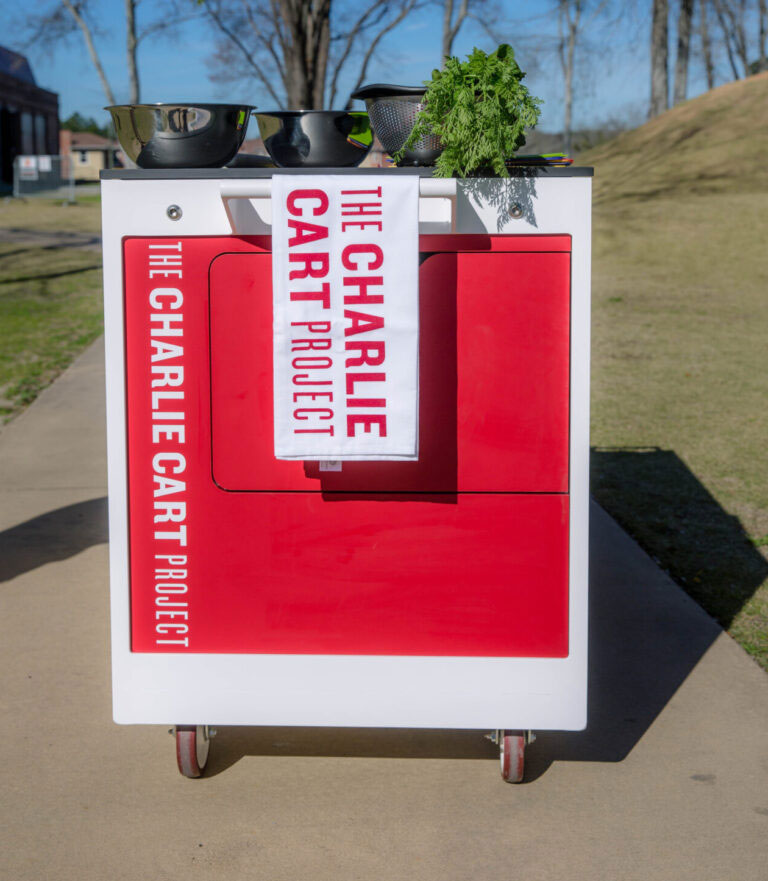 We have Charlie Cart cooking carts ready to be booked for our classrooms! These mobile kitchens are designed by The Charlie Cart Project, whose mission is to equip “the next generation with the knowledge and confidence to make healthy food choices through hands-on cooking.”
While we’ve had mobile cooking carts before, The Charlie Cart takes it to a whole new level. Each cart is compact and mobile, and brings all the tools, lessons, recipes, and support needed to build a comprehensive food education program.
From cutting boards and utensils to a skillet top, the Charlie Cart even includes its own built-in water tank to handle cleanup.
“The carts come with everything needed for an engaging and delicious nutrition lesson,” says Aleeza Hendershot, Nutrition Education and Training Supervisor for Vistas USD.”They even come with standards-aligned grade-level recipes and activities for K-5 classes. These carts will make it much easier for any teacher to host a cooking and nutrition lesson.”
The Charlie Cart is available for signups now. Interested teachers should contact Aleeza Hendershot.
 Build Your Perfect Plate: With all of this amazing food offered, we encourage our students (and staff) to build the plate that they want. Whether it’s adding your favorite toppings to a burger, decorating tamales and tacos with just the right mix of salsa and veggies, or adding fresh fruit to a salad, these options are offered every day.
We encourage you to make the most of everything that’s offered and build your own perfect plate.
We’re Hiring!
Join Our Amazing Team.

School nutrition is an extremely rewarding job. You can be part of the nation’s largest restaurant group, serving tasty and nutritious meals to our children each and every day. What’s more, you’ll meet amazing people who are skilled, dedicated, and passionate about their roles.
Our team has the unique opportunity to interact with almost every student, every day. Those interactions make a big difference in our kids’ lives and lead to long-lasting and meaningful friendships.
See all of our available positions here: https://wavecrestcafe.com/employment-opportunities/
Follow us on social media:



(C) 2026 WaveCrest Cafe / Vista Unified School District
This institution is an equal opportunity provider.
Esta institución es un proveedor de igualdad de oportunidades.
In accordance with federal civil rights law and U.S. Department of Agriculture (USDA) civil rights regulations and policies, the USDA, its agencies, offices, employees, and institutions participating in or administering USDA programs are prohibited from discriminating based on race, color, national origin, religion, sex, disability, age, marital status, family/parental status, income derived from a public assistance program, political beliefs, or reprisal or retaliation for prior civil rights activity, in any program or activity conducted or funded by USDA (not all bases apply to all programs). Remedies and complaint filing deadlines vary by program or incident.
Persons with disabilities who require alternative means of communication for program information (e.g., Braille, large print, audiotape, American Sign Language, etc.) should contact the state or local agency that administers the program or contact USDA through the Telecommunications Relay Service at 711 (voice and TTY). Additionally, program information may be made available in languages other than English.
To file a program complaint of discrimination, complete the USDA Program Discrimination Complaint Form (AD-3027), found online at http://www.ascr.usda.gov/complaint_filing_cust.html and at any USDA office, or write a letter addressed to USDA and provide in the letter all of
the information requested in the form. To request a copy of the complaint form, call 866-632-9992. Submit your completed form or letter to USDA by:
(1) Mail: U.S. Department of Agriculture
Office of the Assistant Secretary for Civil Rights
1400 Independence Avenue, SW, Mail Stop 9410
Washington, D.C. 20250-9410
(2) Fax: 202-690-7442
(3) E-mail: [email protected]
This institution is an equal opportunity provider.
Declaración de no discriminación de USDA De conformidad con la ley federal de derechos civiles, y las regulaciones y políticas de derechos civiles del Departamento de Agricultura de los Estados Unidos (USDA, por sus siglas en inglés), el USDA, sus agencias, oficinas y empleados, y las instituciones que participan en los programas del USDA o los administran, tienen prohibido discriminar basándose en la raza, color, origen nacional, religión, sexo, identidad de género (incluida la expresión de género), orientación sexual, discapacidad, edad, estado civil, estado familiar/parental, ingresos derivados de un programa de asistencia pública o ideología política, y tomar represalias por actividad previa sobre derechos civiles, en cualquier programa o actividad dirigida o financiada por el USDA (no todas las bases aplican a todos los programas). Las fechas límite de la presentación de quejas y recursos legales varían según el programa o incidente.
Las personas con discapacidades que requieren medios de comunicación alternativos para recibir información sobre el programa (por ejemplo, Braille, letra grande, cinta de audio, lengua de señas estadounidense, etcétera) deben contactar la agencia responsable o al TARGET Center del USDA al (202) 720-2600 (voz y TTY), o contactar al USDA a través del Servicio Federal de Retransmisión llamando al (800) 877-8339. Además, la información del programa puede estar disponible en otros idiomas distintos al inglés.
Para presentar una queja sobre discriminación en el programa, complete el Formulario de quejas sobre discriminación en el programa, AD-3027, que se encuentra en http://www.ascr.usda.gov/complaint_filing_cust.html y en cualquier oficina del USDA, o escriba una carta dirigida al USDA y proporcione en ella toda la información solicitada en el formulario. Para solicitar una copia del formulario de quejas, llame al (866) 632-9992. Envíe su formulario completo o carta al USDA por los siguientes medios:
(1) (2) (3) correo postal: U.S. Department of Agriculture Office of the Assistant Secretary for Civil Rights 1400 Independence Avenue, SW Washington, D.C. 20250-9410;
(2) fax: (202) 690-7442; o
(3) correo electrónico: [email protected].
USDA es un proveedor, empleador y entidad crediticia que ofrece igualdad de oportunidades.