

January 2026 Nutrition Newsletter
January 01st, 2026
Si desean leer el boletín en español, hagan clic aquí.
In this issue:
• New Spring 2026 Menu
• Fall Menu Survey Results
• Farm to School Spotlight: Harvest of the Month
• Menu Spotlight: Korean BBQ Meatball Bowl
• Job & career opportunities
• More…
Spring 2026 Menu is Now Available!
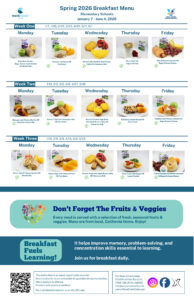 Our spring menu is ready to view here: https://wavecrestcafe.com/menu/ We’ve got plenty of tasty new menu items in store, and are happy to be working with local vendors and farmers. A few things of note:
Semester-long menus: We received positive feedback from students regarding the semester-long menus, as they provided more menu choices by having a three-week menu cycle! More variety means students stay more engaged with the menu and are excited about upcoming entree items. Your students will be able to find long-time favorite entrees along with some new items. We’re excited to share that we’re expanding our vegetarian and vegan choices for students! New additions include vegetarian chicken nuggets and a vegan hot dog, giving students more variety and delicious plant-based options at mealtime.
 Local Protein: Our Farm to School program has always delivered plenty of local, California fruits and vegetables, and now we are expanding to more protein sources. Starting with our new menu our burgers are now coming from CreamCo Meats, a butcher and distributor that works with family-owned ranches committed to sustainable, regenerative practices. Try our delicious new burgers during our lunch service!
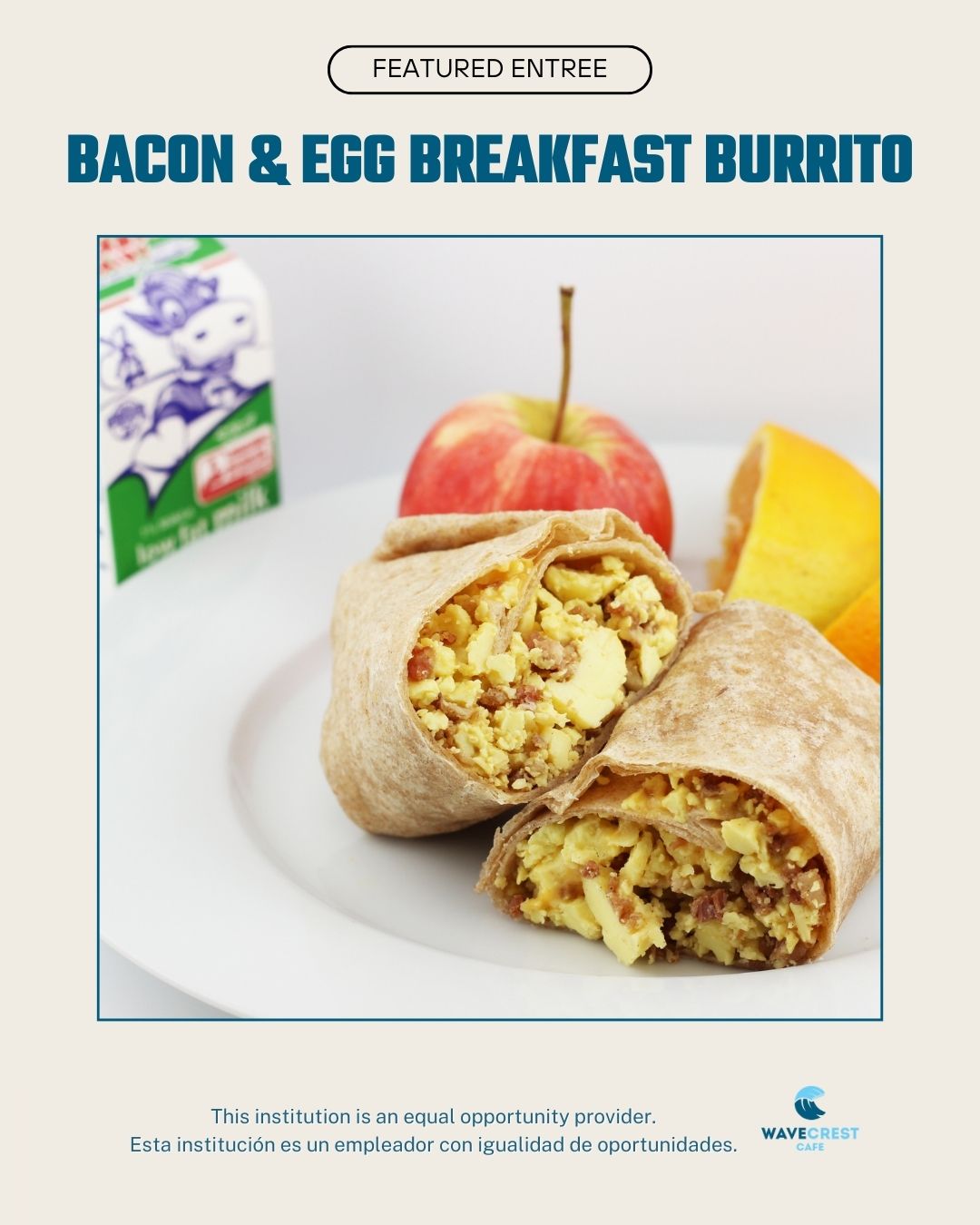 Protein-rich breakfast entrees: We continue to develop more protein-rich breakfast entrees to offer each and every day as part of a healthy and delicious mix of foods designed to power learning all day long. Among the items are:
Bacon, Egg, and Cheese Burrito
Turkey Sausage and Cheese Croissant
Omelet with Hash Brown
Ham and Cheese Croissant
Bacon and Cheese Egg Bites
French Toast with Sausage Links
Sausage and Cheese Burrito
All breakfasts come with a selection of fresh, seasonal fruits. Enjoy these protein-packed entrees and join us for breakfast daily!
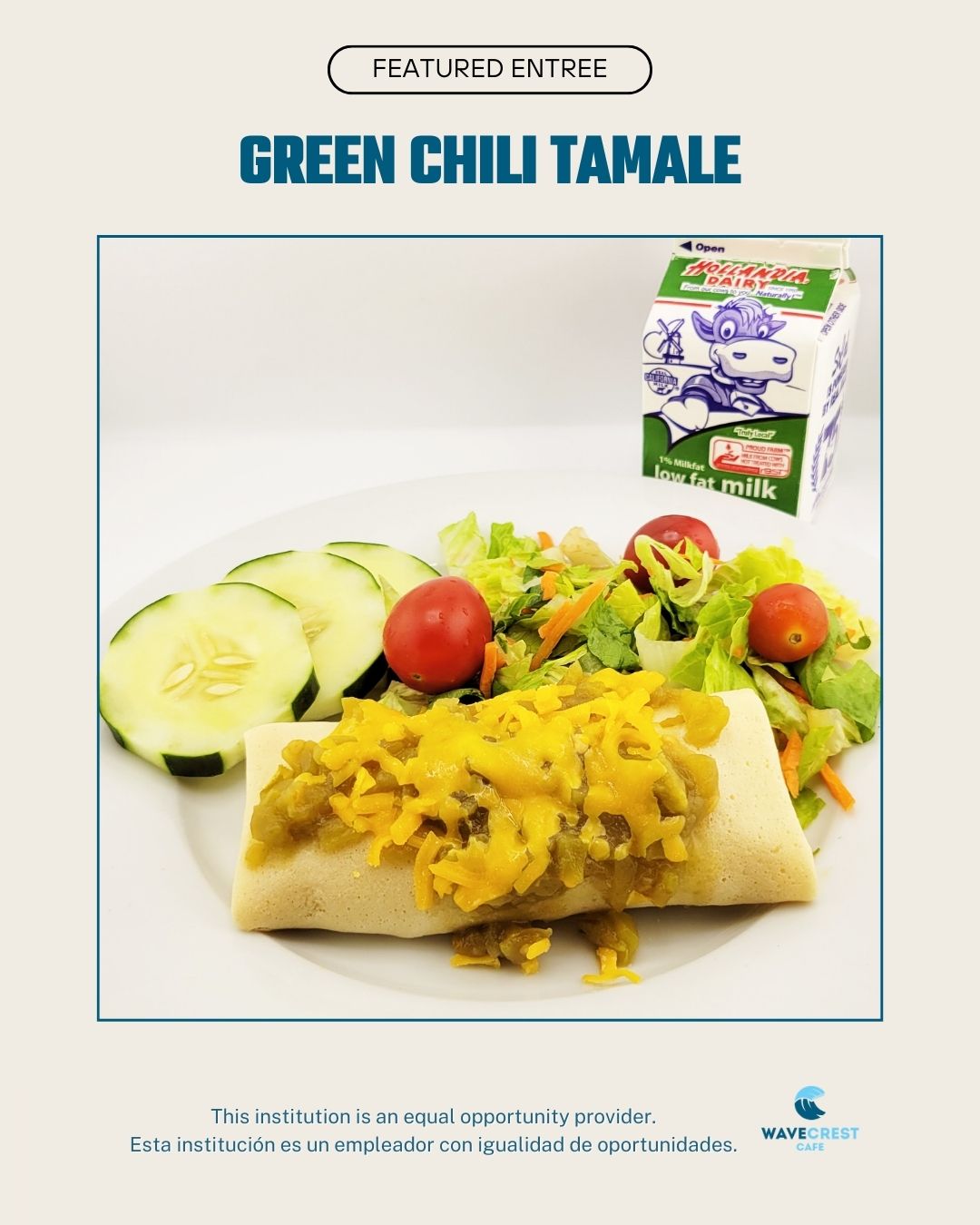 Featured lunch entrees: We’re adding a bunch of new options to our already robust mix of returning favorite items. Joining our lineup of Cheese and Pepperoni WaveCrest Pizza is a special Veggie Pizza for the Spring menu. Other lunch entrees for the Spring include:
Korean BBQ Meatball Bowl
Vegetarian Chili and Tortilla Chips
Build Your Own Parfait Bar (Elementary Schools Only)
Chicken Parm Bowl
Carnitas Nachos
Green Chili and Cheese Tamale
Teriyaki Chicken with Rice
BBQ Rib Sandwich
Bean and Cheese Pupusa
Orange Chicken with Rice
Oven Roasted Chicken Wings (Middle and High School only)
Be sure to check your school’s menu for your daily favorites.
*** Menus are subject to change based on ingredient availability and staffing needs.
Fall Menu Survey Results
Thank you to the 2,000+ people who participated in our fall menu survey. These surveys are an invaluable resource for us to hear feedback from students, staff, and families about the food we serve and the ways we continue to innovate and improve in what we do.
As you can imagine, there is a wide variety of responses.
Most/Least Favorite Entrees
This is a category that showcases the diversity of tastes among our entire student and staff population. It’s also why we work to provide multiple options for every meal; no two people’s taste buds are the same, so new and different items are an important part of our work.
Elementary Schools
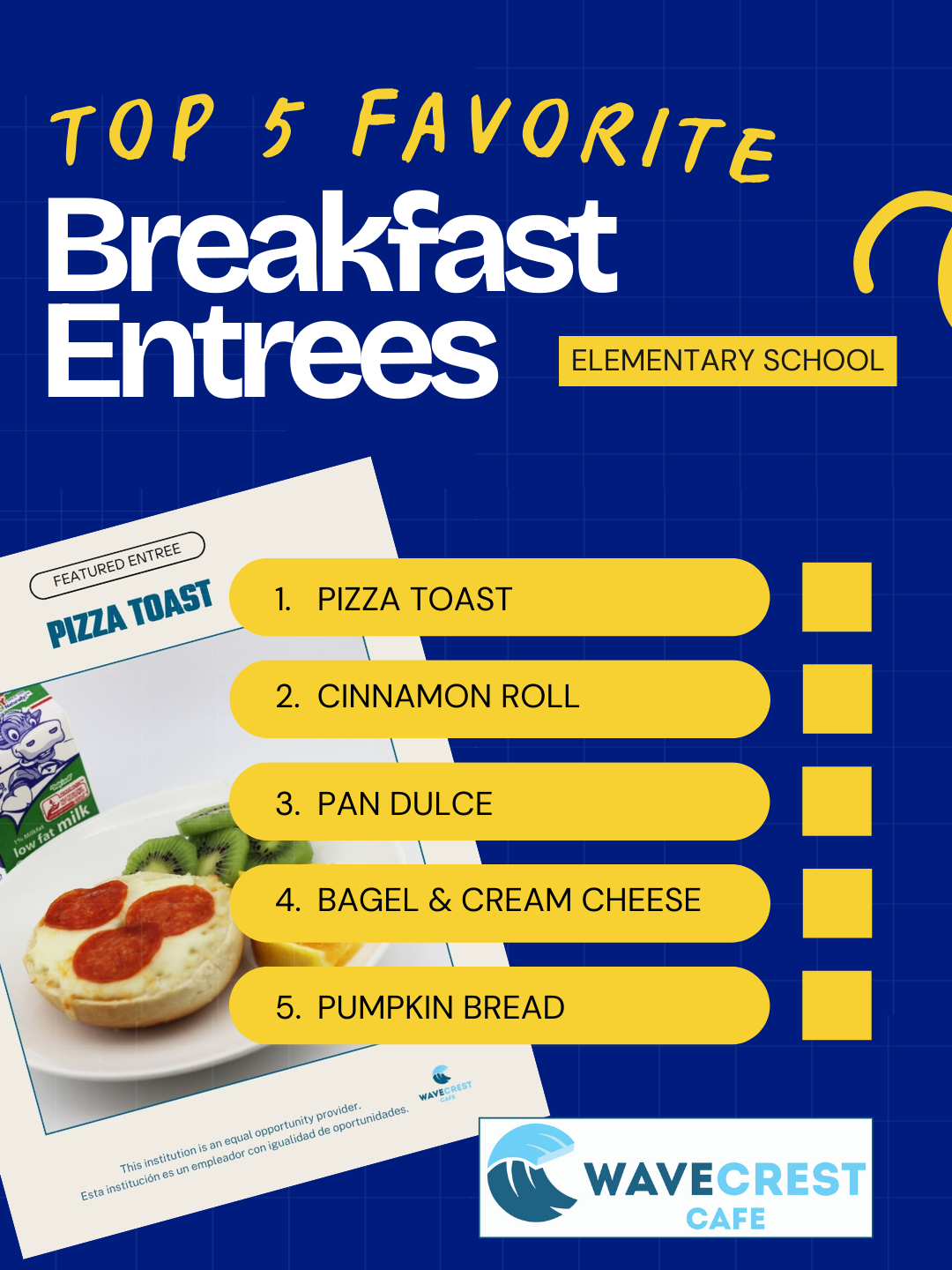 Breakfast
The top five favorite breakfast entrees for elementary school students were: Pizza Toast; Cinnamon Roll; Pan Dulce; Bagel & Cream Cheese; Pumpkin Bread
On the other side of the spectrum, the five least-favorite items were: Yogurt Bento Box; Breakfast Taquito; Apple Cinnamon Muffin; Breakfast Pocket with Turkey; Bacon & Cheese Egg Bites
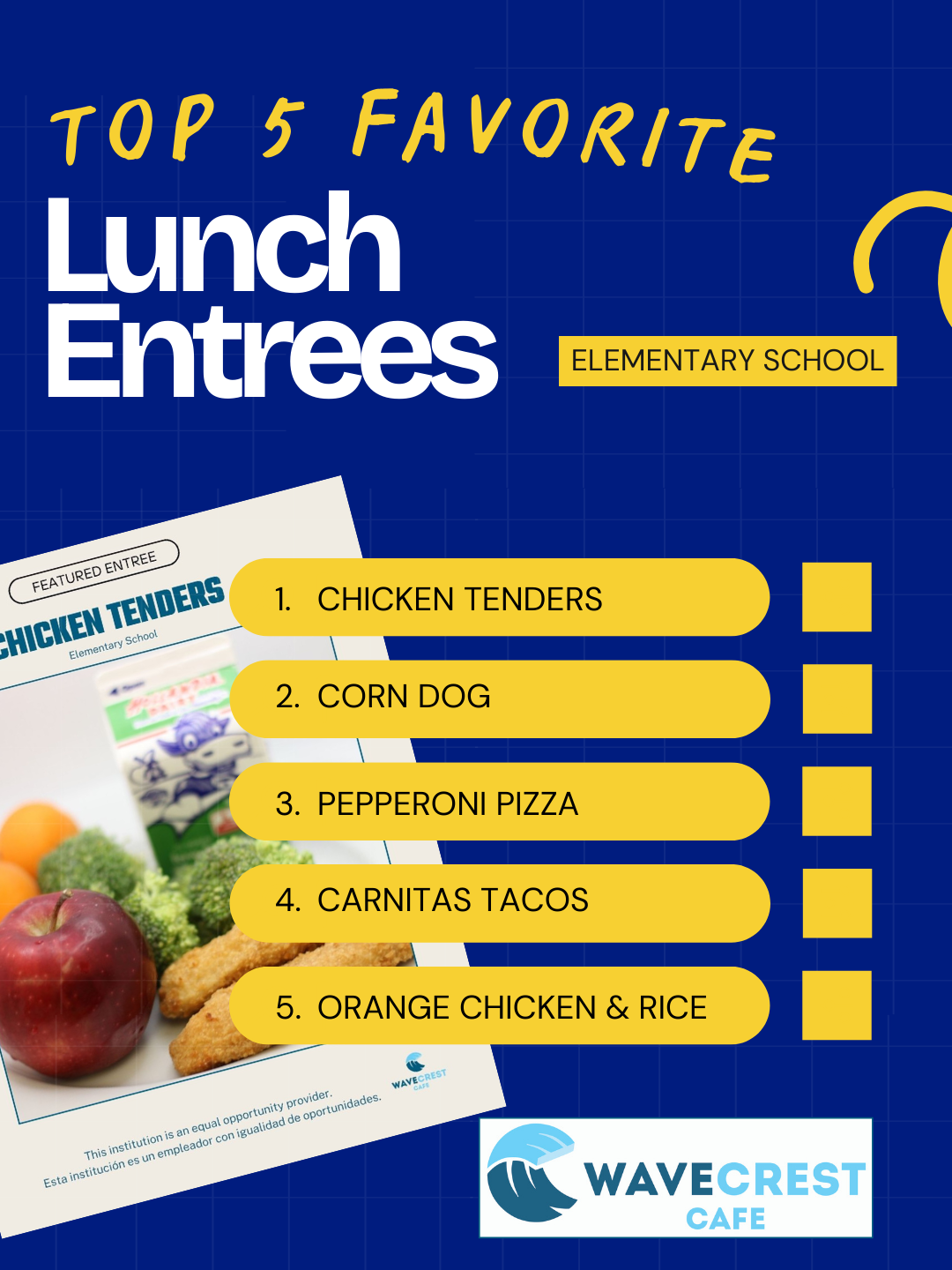 Lunch
Lunch
For lunch, our elementary students’ favorite items were: Chicken Tenders; Corn Dog; WaveCrest Pepperoni Pizza; Carnitas Tacos; Orange Chicken & Rice
The least favorite lunch items were: Beef and Broccoli with Rice; Black Bean Taquitos; Bean and Cheese Pupusa; Birria Pupusa; Soft Pretzel with Cheese
Middle & High Schools
 Breakfast
The top five favorite breakfast entrees for our middle and high school students were: Pizza Toast; Cinnamon Roll; Benefit Bar; Pan Dulce; Bagel and Cream Cheese
The five least-favorite items were: Breakfast Taquito; Yogurt Bento Box; Biscuit with Pork Sausage; Breakfast Pocket with Turkey; Bacon & Cheese Egg Bites
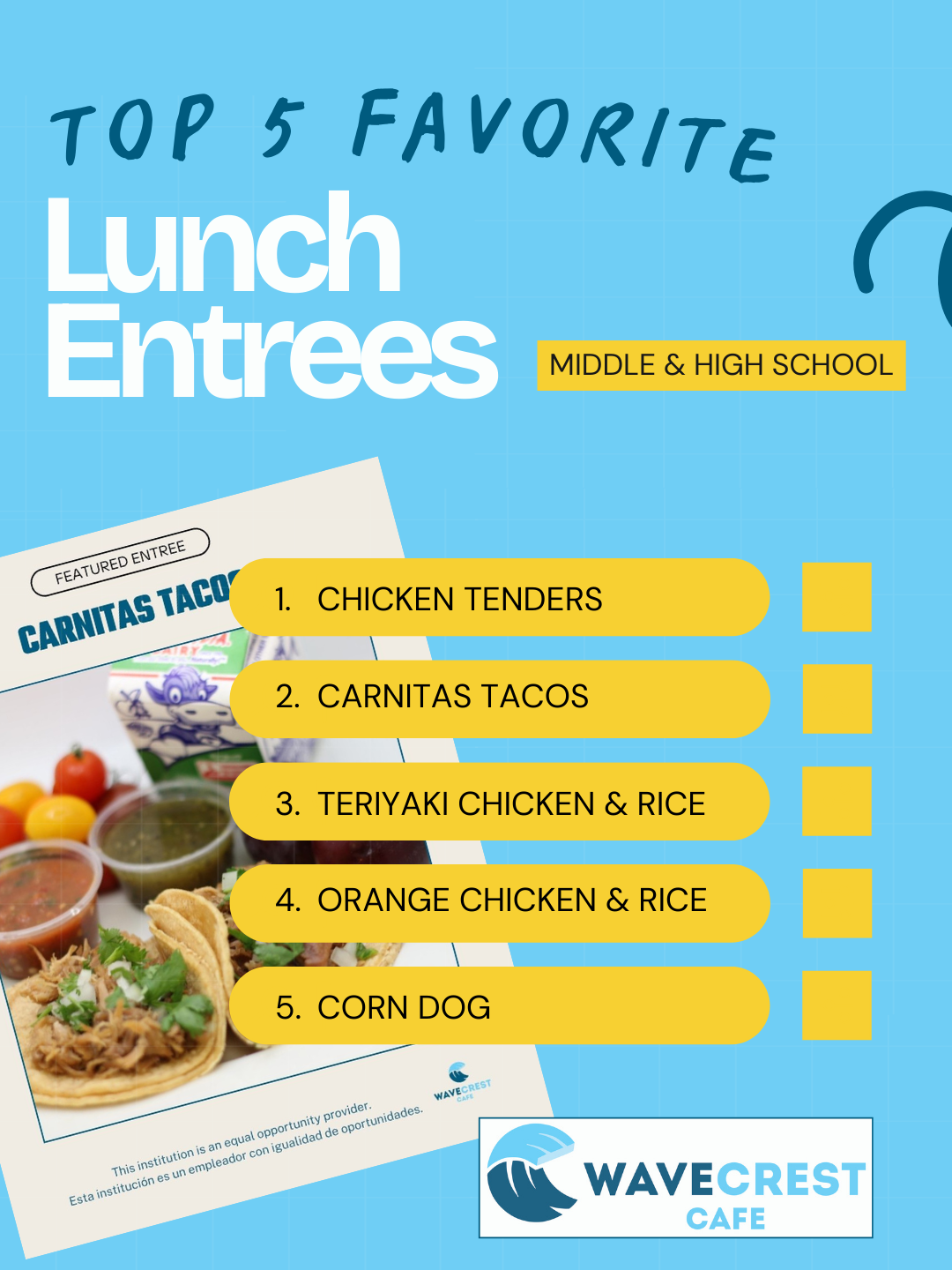 Lunch
Lunch
The top items for lunch with middle and high schoolers were: Chicken Tenders; Carnitas Tacos; Teriyaki Chicken with Rice; Orange Chicken and Rice; Corn Dog
The least favorite lunch items were: Bean and Cheese Burrito; Bean and Cheese Pupusa; Beef and Broccoli with Rice; Jalapeno Grilled Cheese Sandwich; Black Bean Taquitos
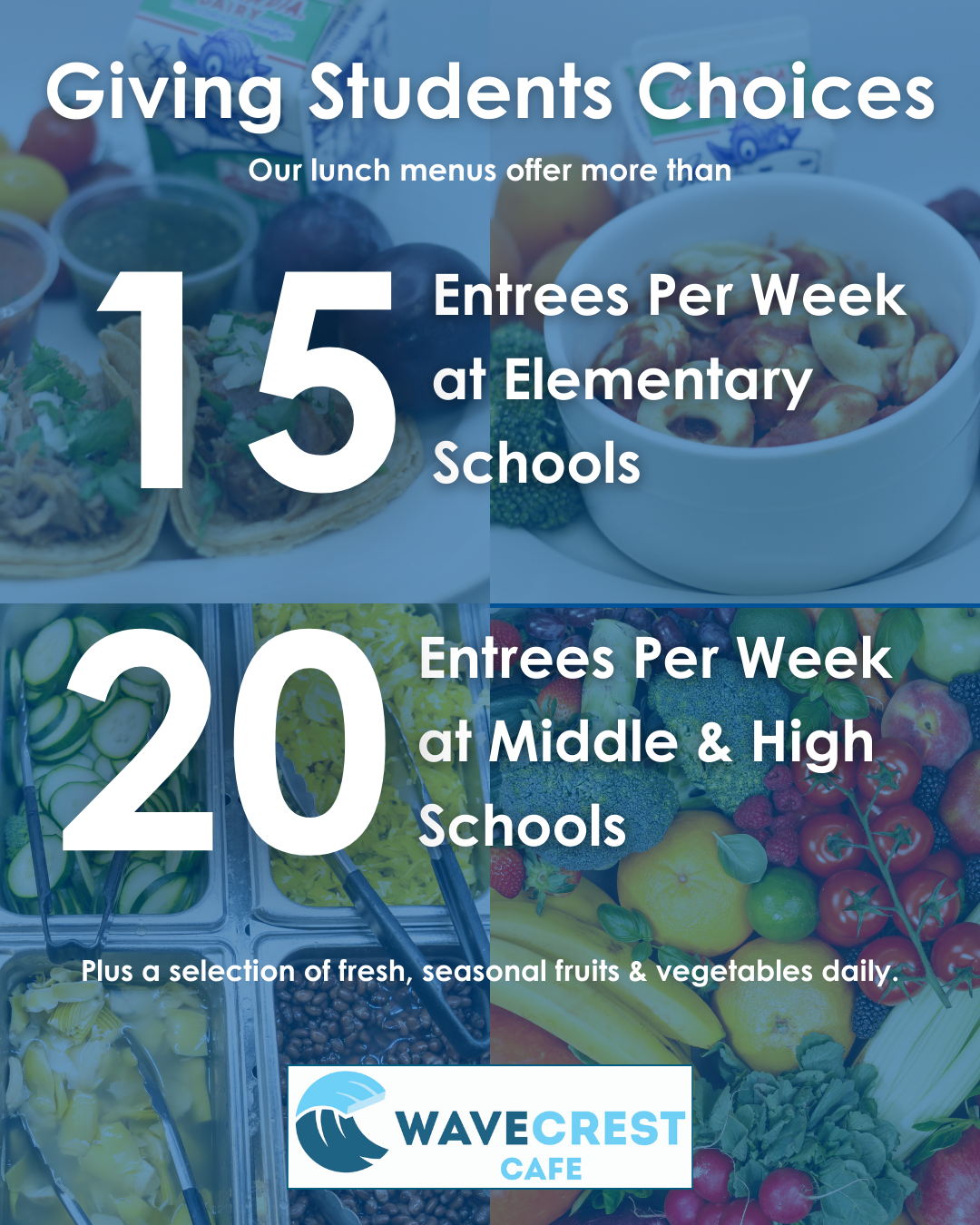 Why We Have Options: With our middle and high school respondents, it is worth pointing out that some of the items listed as least favorite also rank high on the list of favorites, proving that our tastes are diverse and can change throughout our lives.
This is just one example of why we offer multiple options each day and try to design our menus to meet a wide range of taste and texture preferences.
What You Knew About Us
We always ask a series of questions about our program to see how our communication is working.
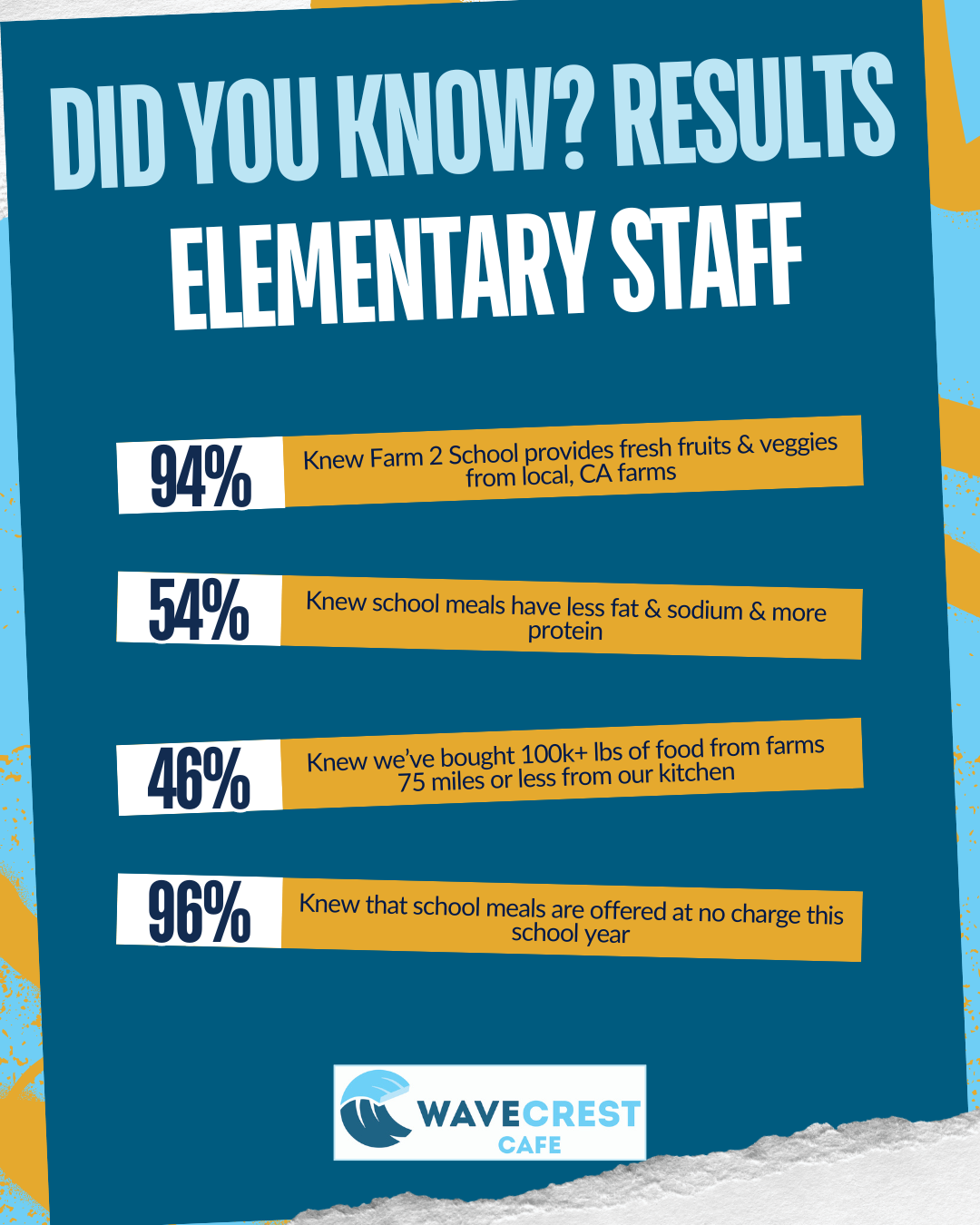 Elementary Staff
We were thrilled to see a high level of awareness for our messages among the staff of elementary schools.
• 94% of responding staff knew our Farm to School program provides fresh, seasonal fruits & vegetables from Local California farms.
• 54% knew that school meals, on average, have 50% less fat, 50% less sodium, and 20% more protein than food from restaurants.
• 46% knew that we’ve purchased over 100,000 pounds of food from farms within 75 miles of our Central Kitchen.
• 96% knew that school meals are offered to students at no charge this school year.
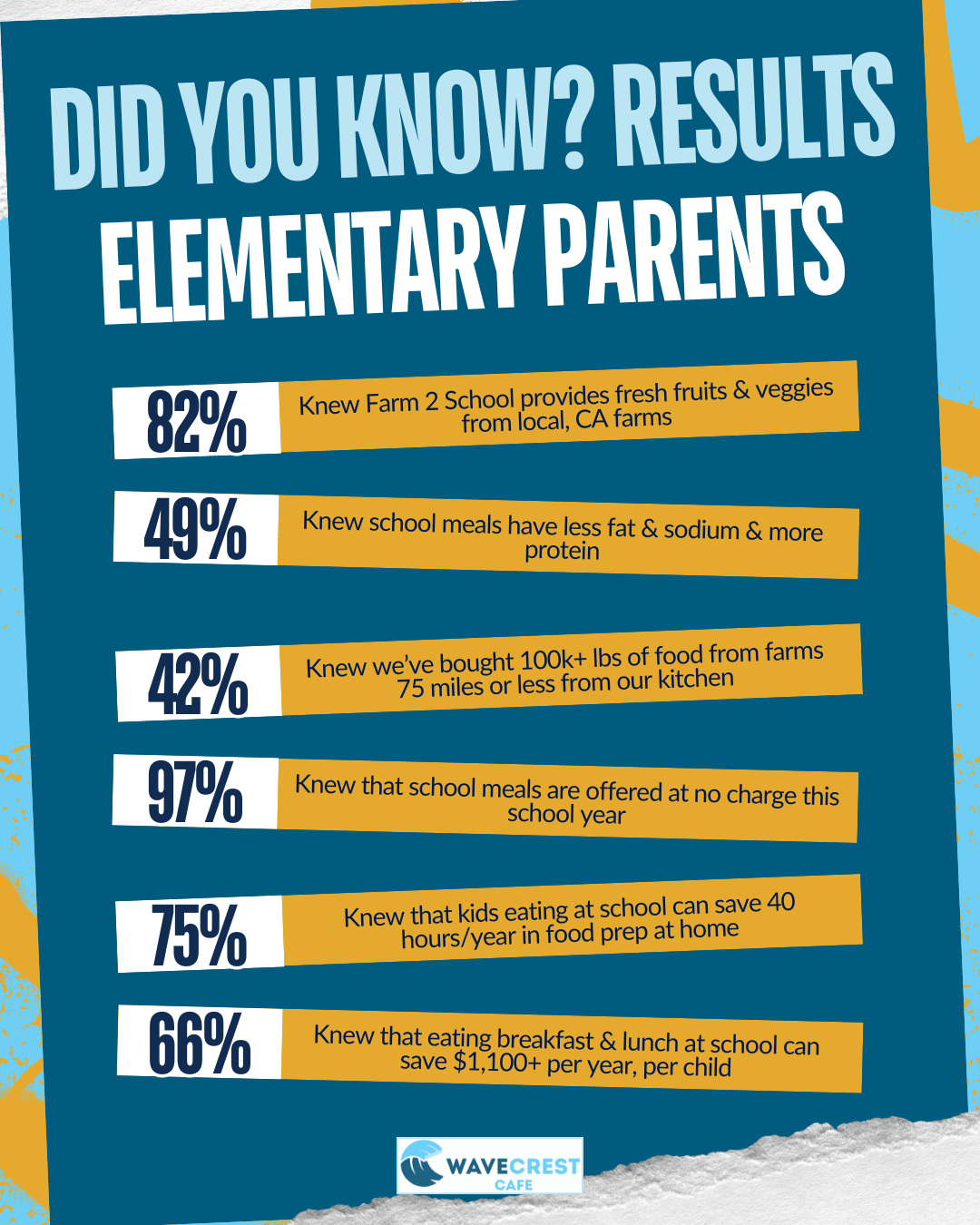 Elementary Parents & Families
• 82% of responding parents knew our Farm to School program provides fresh, seasonal fruits & vegetables from Local California farms.
• 49% knew that school meals, on average, have 50% less fat, 50% less sodium, and 20% more protein than food from restaurants.
• 42% knew that we’ve purchased over 100,000 pounds of food from farms within 75 miles of our Central Kitchen.
• 97% knew that school meals are offered to students at no charge this school year.
• 75% of parents knew that kids eating school meals can save more than 40 hours per year of meal prep at home.
• 66% of parents also knew that eating breakfast and lunch at school can save a family more than $1,100 per year, per child.
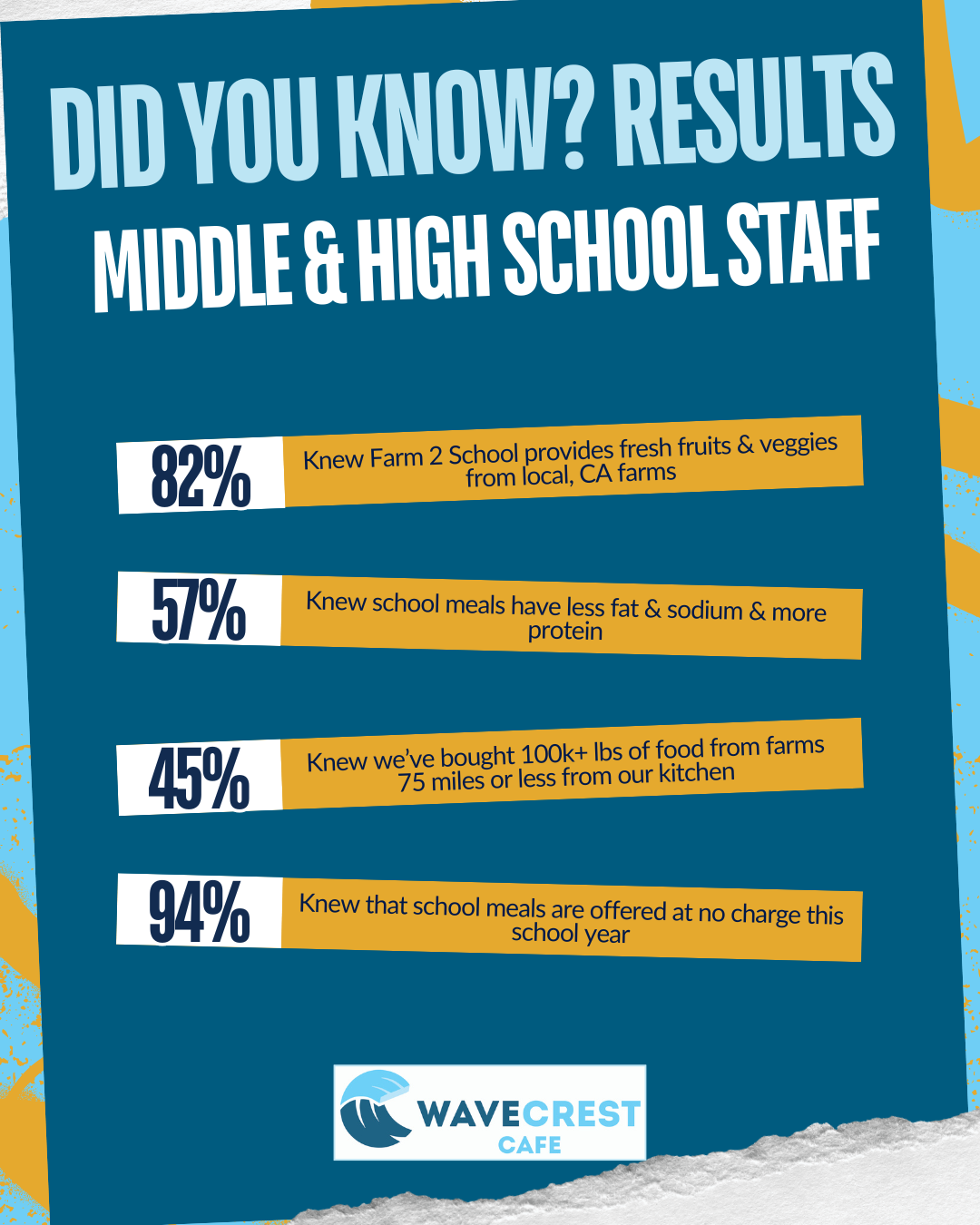 Middle & High School Staff
• 82% of responding staff knew our Farm to School program provides fresh, seasonal fruits & vegetables from Local California farms.
• 57% knew that school meals, on average, have 50% less fat, 50% less sodium, and 20% more protein than food from restaurants.
• 45% knew that we’ve purchased over 100,000 pounds of food from farms within 75 miles of our Central Kitchen.
• 94% knew that school meals are offered to students at no charge this school year.
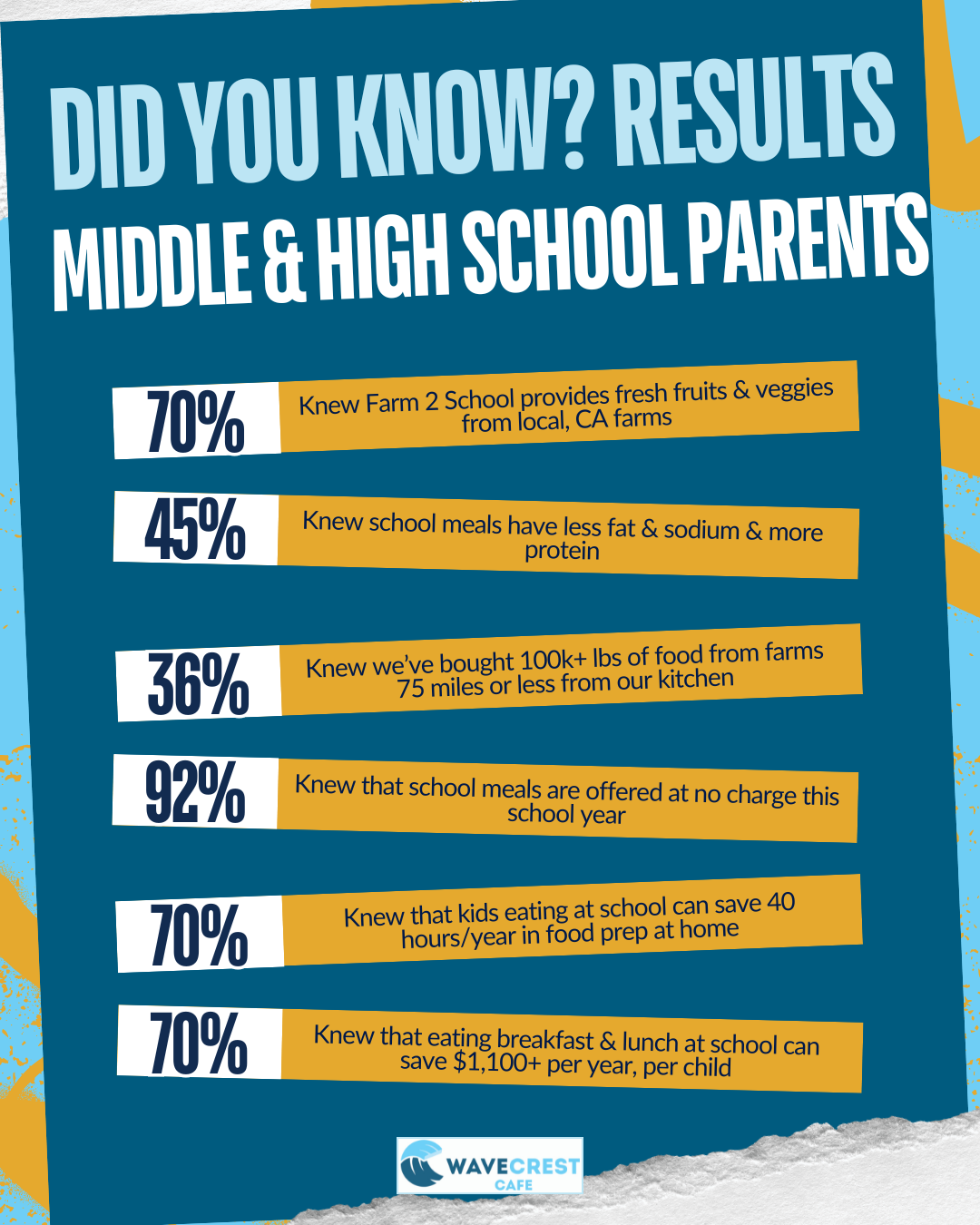 Middle & High School Parents & Families
• 70% of responding parents knew our Farm to School program provides fresh, seasonal fruits & vegetables from Local California farms.
• 45% knew that school meals, on average, have 50% less fat, 50% less sodium, and 20% more protein than food from restaurants.
• 36% knew that we’ve purchased over 100,000 pounds of food from farms within 75 miles of our Central Kitchen.
• 92% knew that school meals are offered to students at no charge this school year.
• 70% of parents knew that kids eating school meals can save more than 40 hours per year of meal prep at home.
• 70% of parents also knew that eating breakfast and lunch at school can save a family more than $1,100 per year, per child.
What You’d Like To See
We appreciate everyone who took the time to offer their feedback as we continually strive to serve tasty, nutritious meals with fresh, seasonal, local California foods. Keep an eye out for a full survey report coming soon!
Farm to School Spotlight
January’s Harvest of the Month is Kale

Kale is part of the family of foods classified as “cooked greens.” These foods come in many shapes and sizes, including lettuce, cabbage, endive, escarole, spinach, broccoli, collards, turnip greens, mustard greens, Swiss chard, and bok choy. They are grown for their leaves and stems, though sometimes the stems are inedible.
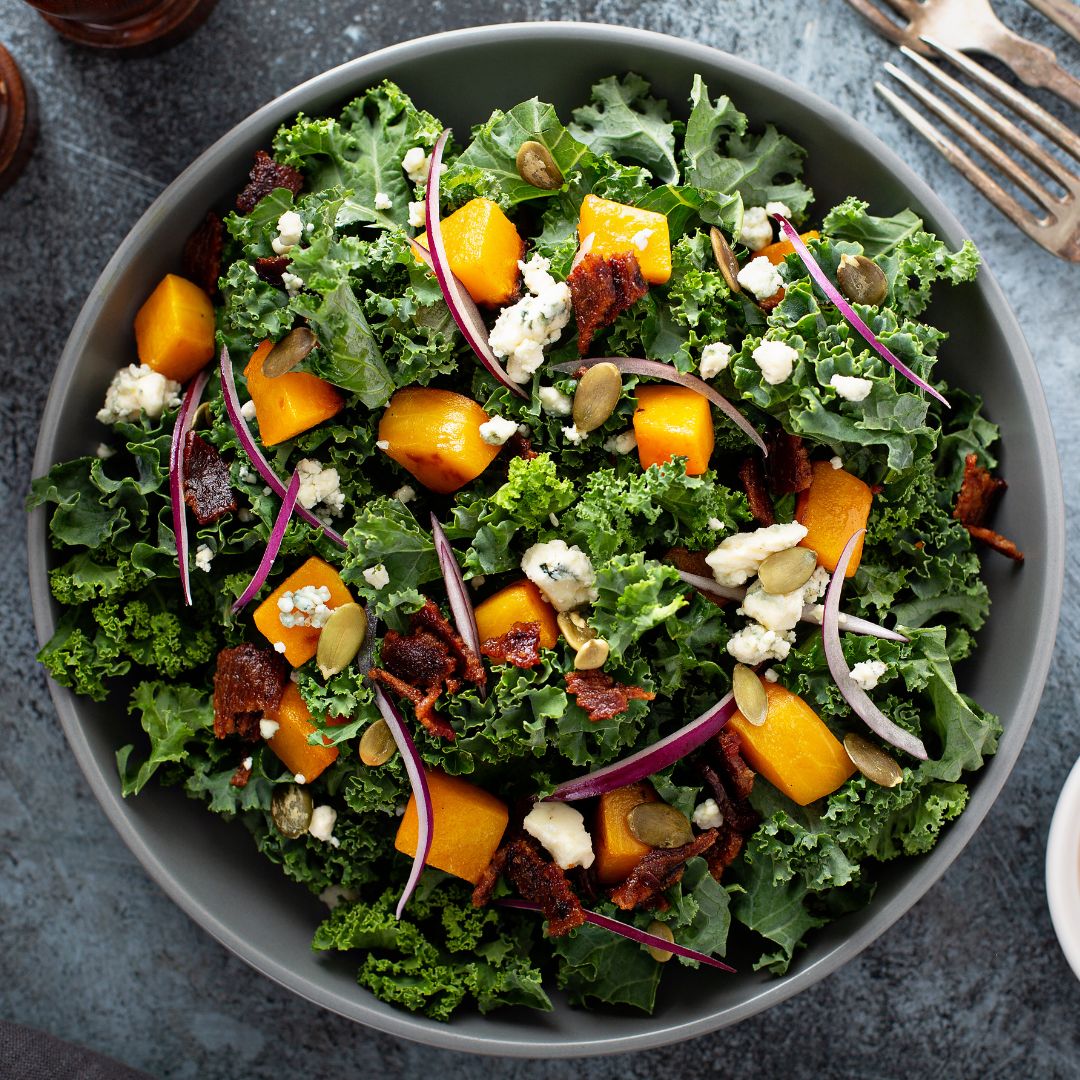 Kale, along with several other varieties – like collards, mustard greens, turnip greens, and bok choy – are part of the cabbage family (Brassica). Other varieties, like Swiss chard, are related to the spinach family (Amaranth). Young plants have small, tender leaves and a mild or sweet flavor (kale, collards, Swiss chard, bok choy). Mature plants have tougher leaves and a stronger flavor (mustard greens, turnip greens).
Kale and other cooked greens are a delicious way to add vitamin-packed dishes to any meal. Most greens are an excellent source of vitamins A, C, and K. And different greens provide other essential benefits. Kale and Swiss chard are packed with manganese, iron, and potassium.
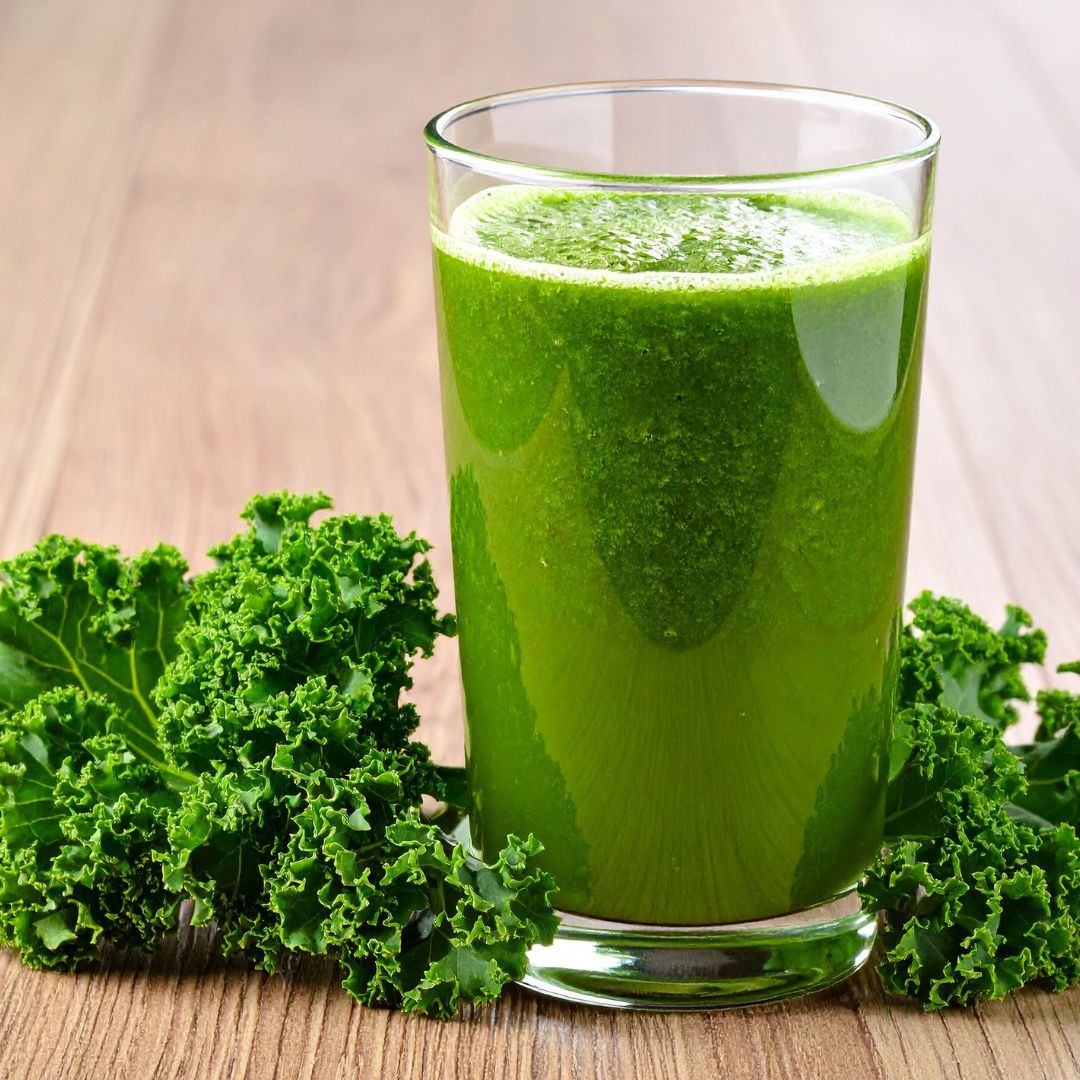 Kale and Cooked Greens Nutrition Facts
• An excellent source of vitamin A, vitamin C, and vitamin K (bok choy, collards, kale, Swiss chard).
• An excellent source of folate (bok choy and collards).
• A good source of manganese (kale and Swiss chard).
• A good source of iron and potassium (Swiss chard).
• A good source of calcium (bok choy and collards)
How Much Do I Need?
A ½ cup of cooked greens is about the same as two cups of raw leafy greens. Leafy greens cook down considerably – from one-quarter up to one-eighth of the original volume.
The amount of fruits and vegetables you need depends on your age, gender, and physical activity level. All forms of fruits and vegetables count towards your daily amount. Leafy greens are available fresh, frozen, and canned, and are just as nutritious when cooked.
 Harvest of the Month Resources
Learn more about Kale with your class during a Harvest of the Month activity. Harvest of the Month is available for any classroom that wants to participate. If your child’s teacher wants to sign up for the program, it’s easy. For more information about the program, classroom tasting parties, and more, email Aleeza Hendershot.
Menu Spotlight: Korean BBQ Meatball Bowl with Rice
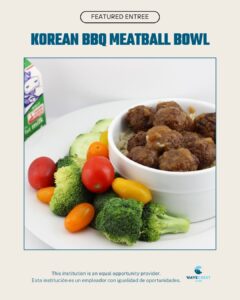
This entree is brand new to our menus. We had successful taste tests during the fall at RBV, Madison, and T.H.E. Leadership Academy, where the response was overwhelmingly positive.
We serve tender, flavorful Korean-seasoned meatballs on top of a bed of rice. Add your favorite fruits and veggies from our rotating selection of fresh, seasonal produce, and you’ve got a delicious meal designed to power a day of learning.
Be sure to check your school’s menu for the full selection of items and your daily favorites.
*** Menus are subject to change based on ingredient availability and staffing needs.
Food Resources for North County
We recognize that people sometimes need extra help to be food secure. Our district has compiled a list of the organizations providing assistance in North County.
If you or someone you know is in need of assistance, we have a section on our Resources page that lists the organizations we know of that are providing these services.
Bring The Charlie Cart to Your School
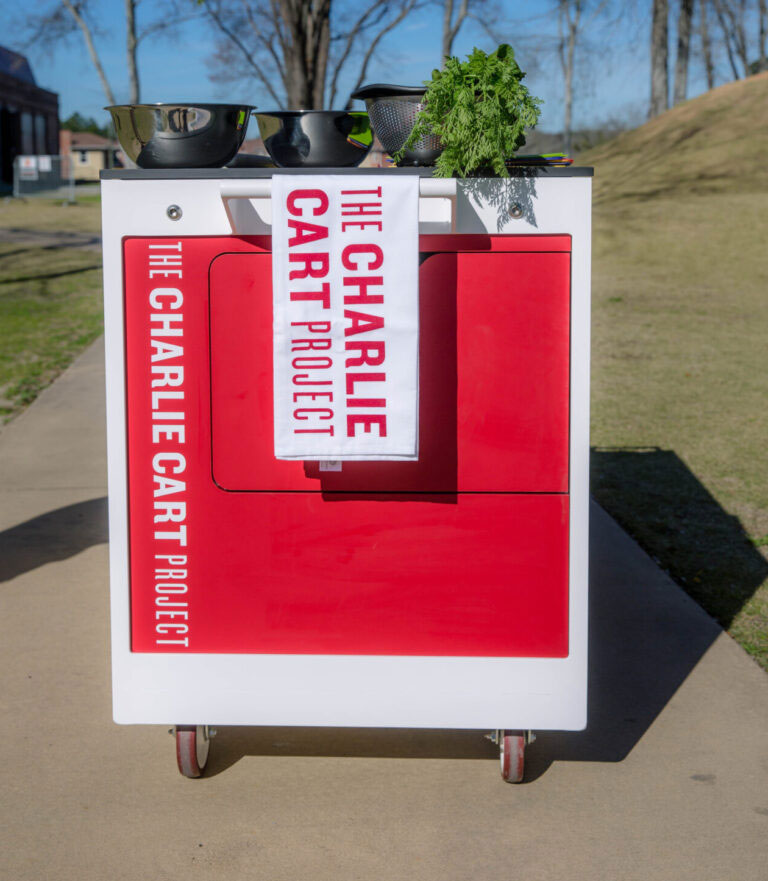 We have Charlie Cart cooking carts ready to be booked for our classrooms! These mobile kitchens are designed by The Charlie Cart Project, whose mission is to equip “the next generation with the knowledge and confidence to make healthy food choices through hands-on cooking.”
While we’ve had mobile cooking carts before, The Charlie Cart takes it to a whole new level. Each cart is compact and mobile, and brings all the tools, lessons, recipes, and support needed to build a comprehensive food education program.
From cutting boards and utensils to a skillet top, the Charlie Cart even includes its own built-in water tank to handle cleanup.
“The carts come with everything needed for an engaging and delicious nutrition lesson,” says Aleeza Hendershot, Nutrition Education and Training Supervisor for Vistas USD.”They even come with standards-aligned grade-level recipes and activities for K-5 classes. These carts will make it much easier for any teacher to host a cooking and nutrition lesson.”
The Charlie Cart is available for signups now. Interested teachers should contact Aleeza Hendershot.
 Build Your Perfect Plate: With all of this amazing food offered, we encourage our students (and staff) to build the plate that they want. Whether it’s adding your favorite toppings to a burger, decorating tamales and tacos with just the right mix of salsa and veggies, or adding fresh fruit to a salad, these options are offered every day.
We encourage you to make the most of everything that’s offered and build your own perfect plate.
Student Meals Aren’t Just Free, They’re Saving Families Money
Student meals continue to be offered at no cost. School meals deliver benefits, including a connection to better academic performance, reduced absences, reducing food insecurity, eliminating the stigma for school meals, and equitable access to fresh foods.
On top of that, families are saving money. A conservative estimate shows that having students choose school meals can save a family over $1,300 per year, per child. Factoring in an average cost of $4.50 per lunch and $3.00 per breakfast, and multiplying that by the 180 instructional days of a school year, the savings add up.
A recent study by the consulting firm Deloitte found that a Peanut Butter & Jelly sandwich costs more to make at home than the cost of a school meal. California’s commitment to universal school meals expands the savings even more.
Not only is there a significant financial benefit to families, but our Farm to School program means that students are offered a wide variety of fresh, seasonal fruits and vegetables, including organic products, from partners like Dickinson Family Farms and Dassi Family Farms.
Join us for breakfast and lunch, and enjoy fresh, healthy, delicious meals and the peace of mind of no-cost meals for all of our students.
MenuLogic K12 Makes Detailed Nutrition Information Easy To Find!
We are thrilled to work with MenuLogic K12 to provide an easy-to-access guide to our menus, nutrition information, and a list of allergens in any item.
Simply visit our menu page and scroll to the listing at each grade level that says, “Click here for all menu nutrition and allergen information.” The Menu Logic page lets you choose your school, and then see a detailed listing of all the nutrition and allergen information for every entree, side dish, and condiment.
Enjoy this quick, user-friendly resource!
We’re Hiring!
Join Our Amazing Team.

School nutrition is an extremely rewarding job. You can be part of the nation’s largest restaurant group, serving tasty and nutritious meals to our children each and every day. What’s more, you’ll meet amazing people who are skilled, dedicated, and passionate about their roles.
Our team has the unique opportunity to interact with almost every student, every day. Those interactions make a big difference in our kids’ lives and lead to long-lasting and meaningful friendships.
See all of our available positions here: https://wavecrestcafe.com/employment-opportunities/
Follow us on social media:



(C) 2026 WaveCrest Cafe / Vista Unified School District
This institution is an equal opportunity provider.
Esta institución es un proveedor de igualdad de oportunidades.
In accordance with federal civil rights law and U.S. Department of Agriculture (USDA) civil rights regulations and policies, the USDA, its agencies, offices, employees, and institutions participating in or administering USDA programs are prohibited from discriminating based on race, color, national origin, religion, sex, disability, age, marital status, family/parental status, income derived from a public assistance program, political beliefs, or reprisal or retaliation for prior civil rights activity, in any program or activity conducted or funded by USDA (not all bases apply to all programs). Remedies and complaint filing deadlines vary by program or incident.
Persons with disabilities who require alternative means of communication for program information (e.g., Braille, large print, audiotape, American Sign Language, etc.) should contact the state or local agency that administers the program or contact USDA through the Telecommunications Relay Service at 711 (voice and TTY). Additionally, program information may be made available in languages other than English.
To file a program complaint of discrimination, complete the USDA Program Discrimination Complaint Form (AD-3027), found online at http://www.ascr.usda.gov/complaint_filing_cust.html and at any USDA office, or write a letter addressed to USDA and provide in the letter all of
the information requested in the form. To request a copy of the complaint form, call 866-632-9992. Submit your completed form or letter to USDA by:
(1) Mail: U.S. Department of Agriculture
Office of the Assistant Secretary for Civil Rights
1400 Independence Avenue, SW, Mail Stop 9410
Washington, D.C. 20250-9410
(2) Fax: 202-690-7442
(3) E-mail: [email protected]
This institution is an equal opportunity provider.
Declaración de no discriminación de USDA De conformidad con la ley federal de derechos civiles, y las regulaciones y políticas de derechos civiles del Departamento de Agricultura de los Estados Unidos (USDA, por sus siglas en inglés), el USDA, sus agencias, oficinas y empleados, y las instituciones que participan en los programas del USDA o los administran, tienen prohibido discriminar basándose en la raza, color, origen nacional, religión, sexo, identidad de género (incluida la expresión de género), orientación sexual, discapacidad, edad, estado civil, estado familiar/parental, ingresos derivados de un programa de asistencia pública o ideología política, y tomar represalias por actividad previa sobre derechos civiles, en cualquier programa o actividad dirigida o financiada por el USDA (no todas las bases aplican a todos los programas). Las fechas límite de la presentación de quejas y recursos legales varían según el programa o incidente.
Las personas con discapacidades que requieren medios de comunicación alternativos para recibir información sobre el programa (por ejemplo, Braille, letra grande, cinta de audio, lengua de señas estadounidense, etcétera) deben contactar la agencia responsable o al TARGET Center del USDA al (202) 720-2600 (voz y TTY), o contactar al USDA a través del Servicio Federal de Retransmisión llamando al (800) 877-8339. Además, la información del programa puede estar disponible en otros idiomas distintos al inglés.
Para presentar una queja sobre discriminación en el programa, complete el Formulario de quejas sobre discriminación en el programa, AD-3027, que se encuentra en http://www.ascr.usda.gov/complaint_filing_cust.html y en cualquier oficina del USDA, o escriba una carta dirigida al USDA y proporcione en ella toda la información solicitada en el formulario. Para solicitar una copia del formulario de quejas, llame al (866) 632-9992. Envíe su formulario completo o carta al USDA por los siguientes medios:
(1) (2) (3) correo postal: U.S. Department of Agriculture Office of the Assistant Secretary for Civil Rights 1400 Independence Avenue, SW Washington, D.C. 20250-9410;
(2) fax: (202) 690-7442; o
(3) correo electrónico: [email protected].
USDA es un proveedor, empleador y entidad crediticia que ofrece igualdad de oportunidades.